
What Makes Land Feel Safer Than Other Investments
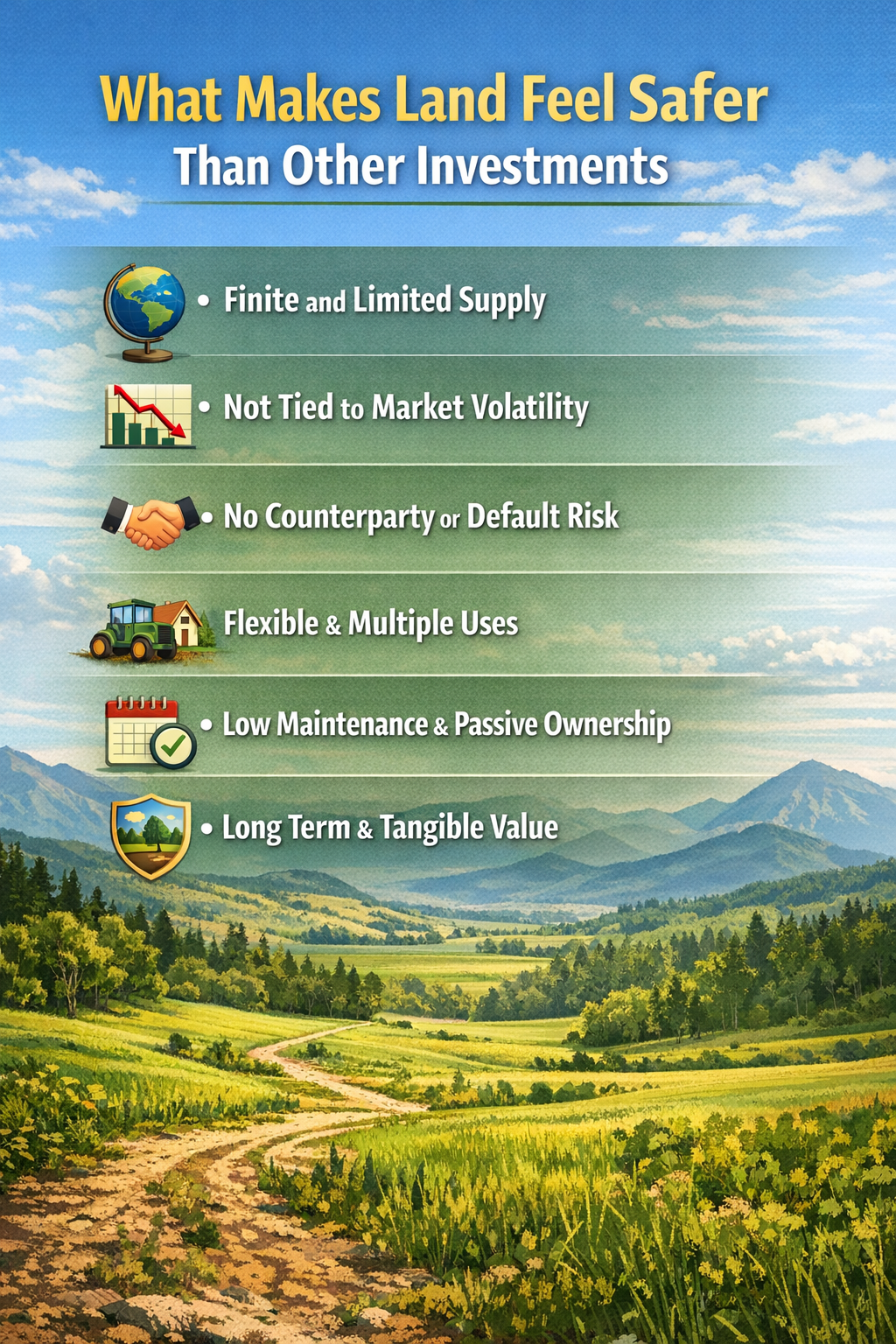
For many investors, safety is not about chasing the highest return. It is about stability, control, and long term value. That is why land often feels safer than traditional investments like stocks, cryptocurrencies, or even rental properties. While land may not deliver fast gains, it offers something many other assets cannot: permanence.
This sense of security is not emotional or nostalgic. It is rooted in how land behaves over time, how it is used, and how little it depends on outside systems.
Land Is a Finite Resource
One of the most basic reasons land feels safer than other investments is simple supply. Land is not being created. While companies can issue more stock and governments can print more money, the amount of usable land remains limited.
As populations grow and development expands, demand increases while supply stays fixed. This scarcity helps protect land value over time, especially in areas with access, resources, or future growth potential.
Why Land May Be a Safer Investment
Land Does Not Depend on Market Performance
Stocks and funds are closely tied to market cycles. When markets dip, values can drop quickly and without warning. Land moves differently.
Land values tend to change slowly. They are influenced by location, zoning, infrastructure, and long term trends rather than daily headlines. This makes land less reactive to short term volatility and easier to hold during uncertain economic periods.
Many landowners view this slower pace as a form of built in risk management.
There Is No Counterparty Risk
Most investments rely on someone else performing their role.
• A company must remain profitable
• A tenant must pay rent
• A bank must stay solvent
• A market must stay liquid
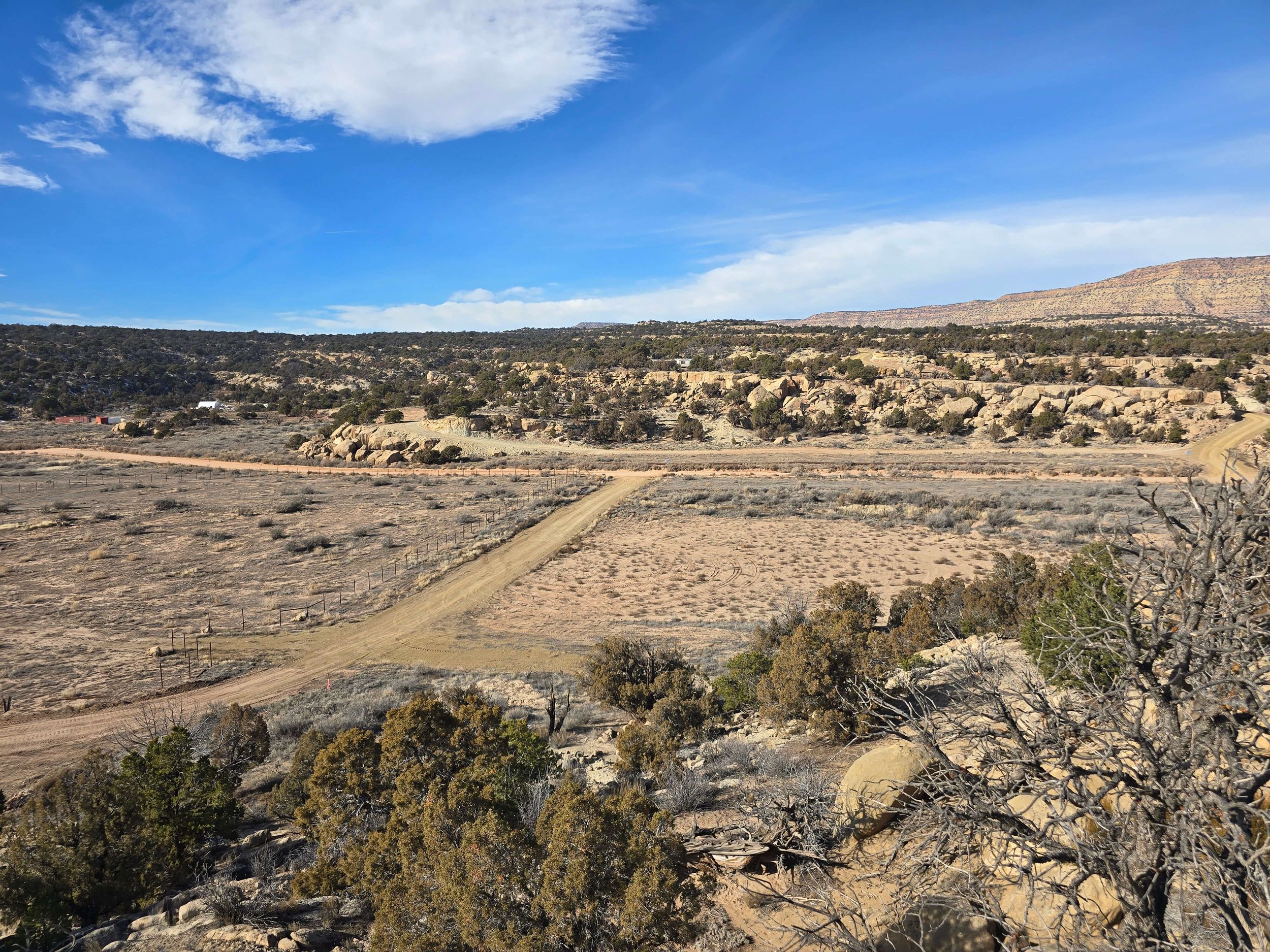
With land, ownership is direct. There is no company managing it, no tenant required, and no dependency on another party for the asset to exist. Once land is paid for, it cannot default, declare bankruptcy, or disappear.
This direct ownership gives investors a sense of control that is difficult to replicate elsewhere.
Land Has Multiple Uses Over Time
Many investments serve a single purpose. Land is flexible.
Depending on zoning and location, land can be used for:
• Long term holding
• Future homesite planning
• Agricultural use
• Recreation or seasonal access
• Leasing or resale
This flexibility reduces risk. If one plan no longer makes sense, land can often be repurposed. That adaptability helps land retain value even as personal goals or economic conditions change.
Land Does Not Require Constant Management
Rental properties and businesses require ongoing involvement. Stocks require monitoring. Land is largely passive.
There are no repairs, no tenants, and no operational costs beyond basic taxes and occasional maintenance if desired. This low overhead reduces stress and makes land easier to hold long term without pressure to sell.
For many buyers, this simplicity contributes heavily to the feeling of safety.
Land Aligns With Long Term Thinking
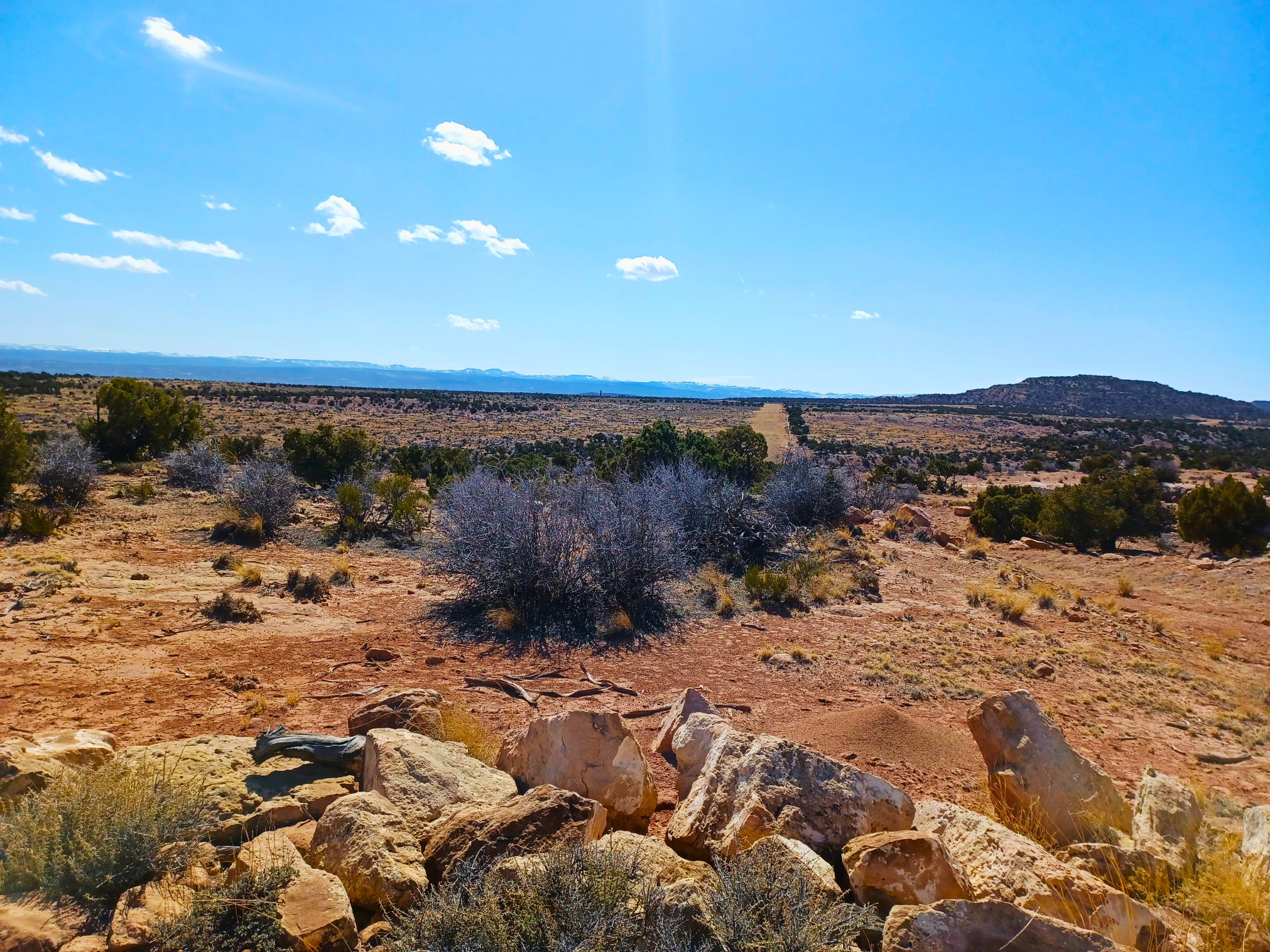
Land rewards patience. It is rarely about short term gains. Instead, it aligns with generational thinking.
• Holding for future development
• Passing down to family
• Using as a long term hedge against inflation
• Preserving access to space and resources
Because land is not easily liquidated or traded daily, owners are less tempted to react emotionally to market noise. This encourages steady, disciplined ownership rather than impulsive decisions.
Land Holds Value Even When Systems Change
Financial systems evolve. Regulations shift. Markets rise and fall. Through all of it, land remains usable.
Even if currencies change or financial platforms fail, land still exists and still serves a purpose. That underlying utility gives land a level of resilience that paper based investments cannot fully match.
This does not mean land is risk free, but its risks are often more visible and slower moving.
Why Many Investors Start With Land
For first time investors or those burned by volatility, land often feels like a reset.
It is tangible
It is understandable
It is owned outright
It is not tied to daily performance
That clarity creates confidence. While land may not always outperform aggressive investments, it often outlasts them.
Final Thoughts
Land feels safer than other investments because it is simple, finite, and stable. It does not rely on constant performance, outside management, or short term trends. Instead, it rewards patience, planning, and long term ownership.
For those looking to preserve value rather than chase it, land offers a level of security that few other assets can match.