
What Is the 3 Layer Rule for Hiking?
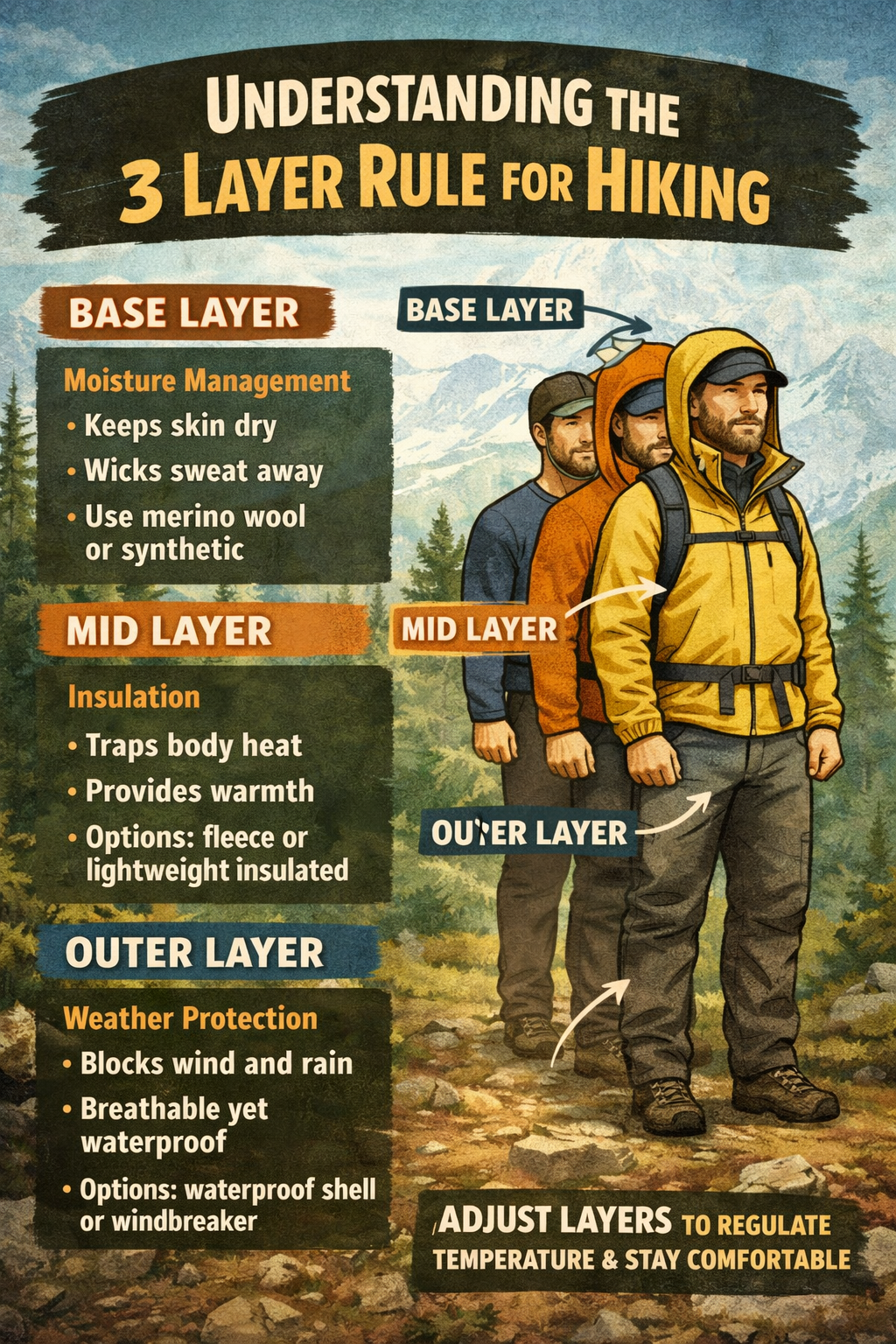
The 3 layer rule for hiking is a clothing system designed to help hikers stay dry, warm, and protected in a wide range of outdoor conditions. Instead of relying on one heavy jacket or guessing how much clothing you will need, the system breaks your clothing into three functional layers that work together. Each layer has a specific job, and when used correctly, they allow you to adapt quickly to changes in weather, terrain, and activity level. This system is widely used by hikers, backpackers, hunters, and outdoor professionals because it reduces risk and increases comfort on the trail.
In wooded and mountainous environments, conditions can change quickly. A sunny morning can turn into a windy afternoon, and temperatures can drop fast once the sun sets or clouds roll in. The 3 layer rule gives hikers flexibility, helping prevent overheating while moving and excessive cooling when stopping.
Why the 3 Layer Rule Matters on the Trail
Clothing choices play a major role in hiking safety, yet they are often underestimated. Many hiking-related issues, including hypothermia, dehydration, and exhaustion, are directly tied to improper clothing. Wearing too much too early can cause excessive sweating, while wearing too little can leave you exposed when the weather shifts. Once moisture builds up on your skin, your body loses heat faster, especially when wind or shade is involved.
The 3 layer rule helps manage these risks by allowing hikers to regulate body temperature throughout the hike. Instead of reacting once you are already cold or overheated, layering encourages proactive adjustments. This approach leads to better energy levels, improved comfort, and safer decision making on the trail.
Layer One: The Base Layer
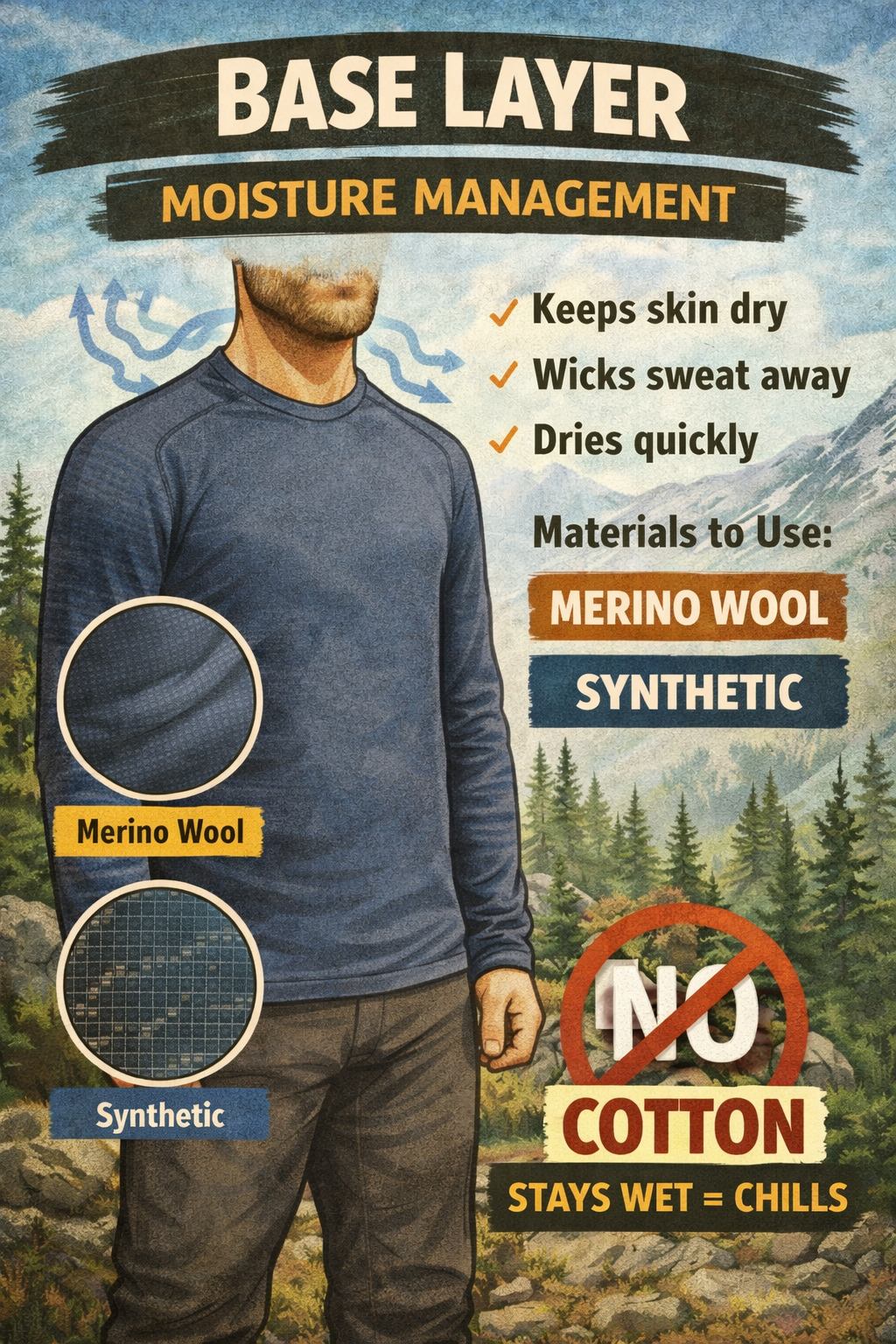
The base layer is worn directly against the skin and plays a critical role in moisture management. Its primary purpose is to move sweat away from your body so it can evaporate rather than soak into your clothing. Even in cold weather, hiking causes your body to sweat. If that moisture stays on your skin, it will cool you rapidly once you slow down, stop moving, or encounter wind.
A proper base layer helps regulate body temperature by keeping your skin dry. Materials like merino wool and synthetic fabrics are commonly used because they dry quickly and continue to insulate even when damp. Cotton should always be avoided as a base layer, as it absorbs moisture and holds it against your skin, increasing the risk of chilling and discomfort. A good base layer should feel comfortable, fit close without restricting movement, and perform consistently throughout the day.
Layer Two: The Mid Layer
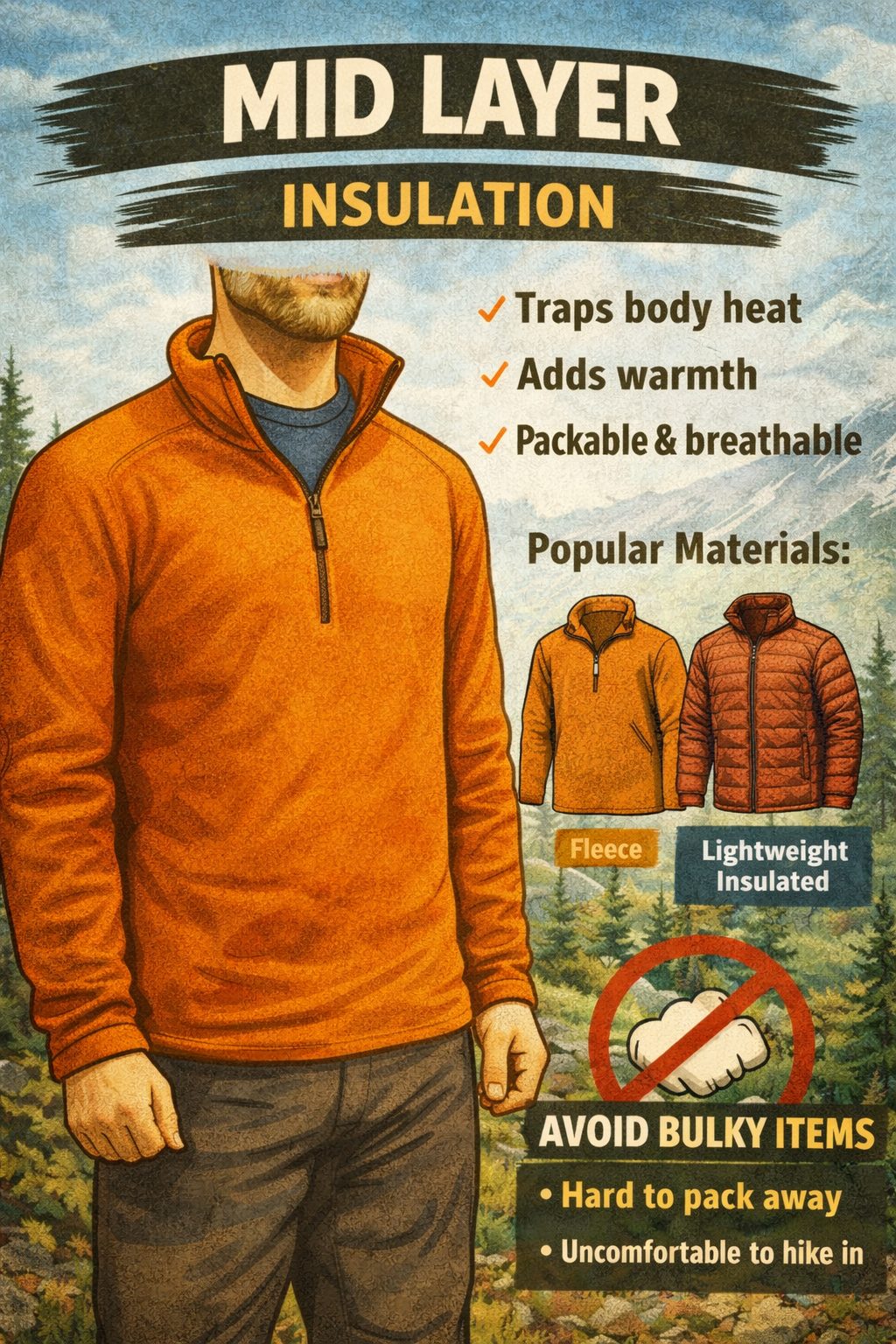
The mid layer provides insulation and is responsible for trapping body heat. This layer creates warmth by holding pockets of warm air close to your body, helping you maintain a stable temperature when conditions are cool or windy. Unlike the base layer, the mid layer is not always worn continuously. Many hikers put it on during rest breaks, at higher elevations, or when temperatures drop.
Mid layers are commonly made from fleece, lightweight insulated materials, or wool. The key is choosing something that provides warmth without adding unnecessary bulk. A well chosen mid layer should be easy to remove and pack away when you start warming up again. Over insulating while hiking can cause overheating, so this layer works best when used strategically rather than constantly.
Layer Three: The Outer Layer
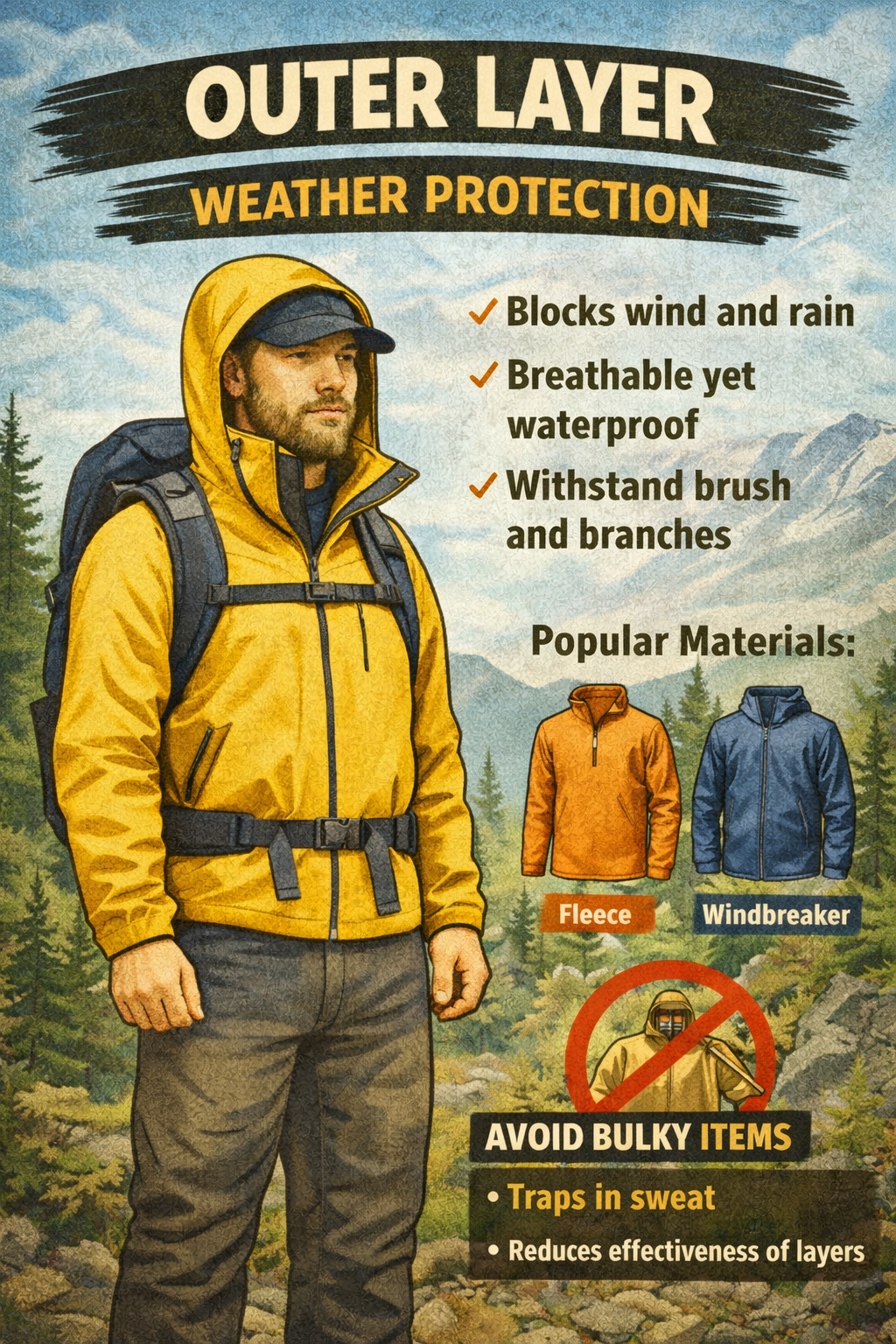
The outer layer serves as your protection against the elements. Its main job is to block wind, rain, snow, and environmental exposure rather than provide warmth on its own. A quality outer layer acts as a barrier, helping prevent heat loss caused by wind and keeping moisture from soaking into your inner layers.
Outer layers are often waterproof or water resistant while still allowing some breathability. This balance is important because a fully non breathable shell can trap sweat inside, defeating the purpose of the layering system. In dry and calm weather, you may not need the outer layer at all, but it should always be easily accessible in your pack. When conditions change quickly, having that protection ready can make a significant difference.
How the 3 Layer Rule Works Together
The real strength of the 3 layer rule lies in its adaptability. The layers are designed to work together, but they do not all need to be worn at the same time. As your activity level and environment change, you can add or remove layers to maintain comfort and safety.
For example, during a steep uphill climb, you may only need your base layer. When hiking across cooler, shaded terrain, adding the mid layer may be enough. On exposed ridges or during rain, the outer layer becomes essential. During breaks or when temperatures drop, wearing all three layers together helps retain heat. This constant adjustment prevents sweat buildup and reduces the risk of getting cold later in the hike.
Common Layering Mistakes to Avoid
Even hikers who understand the 3 layer rule often make mistakes in practice. One of the most common issues is starting a hike overdressed, which leads to sweating early on. Others wait too long to remove or add layers, allowing discomfort to set in before making adjustments. Wearing cotton as a base layer remains a frequent mistake and one of the easiest problems to avoid.
Another common issue is relying on a single heavy jacket instead of a layered system. Heavy jackets limit flexibility and make it harder to regulate temperature. Layering works best when adjustments are made early and often, before conditions become uncomfortable or unsafe.
Does the 3 Layer Rule Work in Summer?
The 3 layer rule is just as useful in warm weather, although the layers tend to be lighter. In summer, the base layer may be a thin, moisture wicking shirt, while the mid layer may be skipped entirely or replaced with a lightweight fleece for cooler evenings. The outer layer often becomes a thin windbreaker or rain shell that provides protection without trapping excessive heat.
Even during summer hikes, weather changes, elevation gains, and evening temperature drops can catch hikers off guard. Having a basic layering system ensures you are prepared without carrying unnecessary bulk.
Is the 3 Layer Rule Enough for All Hiking?
While the 3 layer rule covers most hiking situations, it should be viewed as a foundation rather than a complete solution. Factors such as trip length, weather forecasts, elevation, and access to shelter should always be considered. In extreme cold, high elevation, or winter conditions, additional insulation layers may be necessary.
That said, the 3 layer rule provides a reliable structure that helps hikers make smarter clothing decisions. When paired with good planning and awareness, it significantly reduces risk on the trail.
Final Thoughts
The 3 layer rule for hiking is one of the most effective and practical systems for staying comfortable outdoors. It allows you to manage moisture, retain warmth, and protect yourself from the elements without overpacking or overthinking your clothing choices. By learning how each layer works and when to use it, hikers gain control over their comfort and safety.
Instead of reacting to discomfort, layering helps you stay ahead of it. That is why the 3 layer rule remains a trusted approach for hikers who spend time in the woods year after year.