.webp)
What Is the 20-5-3 Rule for Nature?
The 20-5-3 rule is a simple guideline designed to help people spend more intentional time in nature. It breaks outdoor time into manageable amounts that fit into real life, rather than requiring long trips or major lifestyle changes. The idea is to support mental and physical well being through consistent exposure to natural environments.
This rule has gained attention because it offers a realistic way to reconnect with nature, especially for people who feel busy, overwhelmed, or disconnected from outdoor time.
Understanding the 20-5-3 Rule
The rule is based on three levels of nature exposure spread across different time frames. Each number represents a suggested amount of time spent in natural settings.
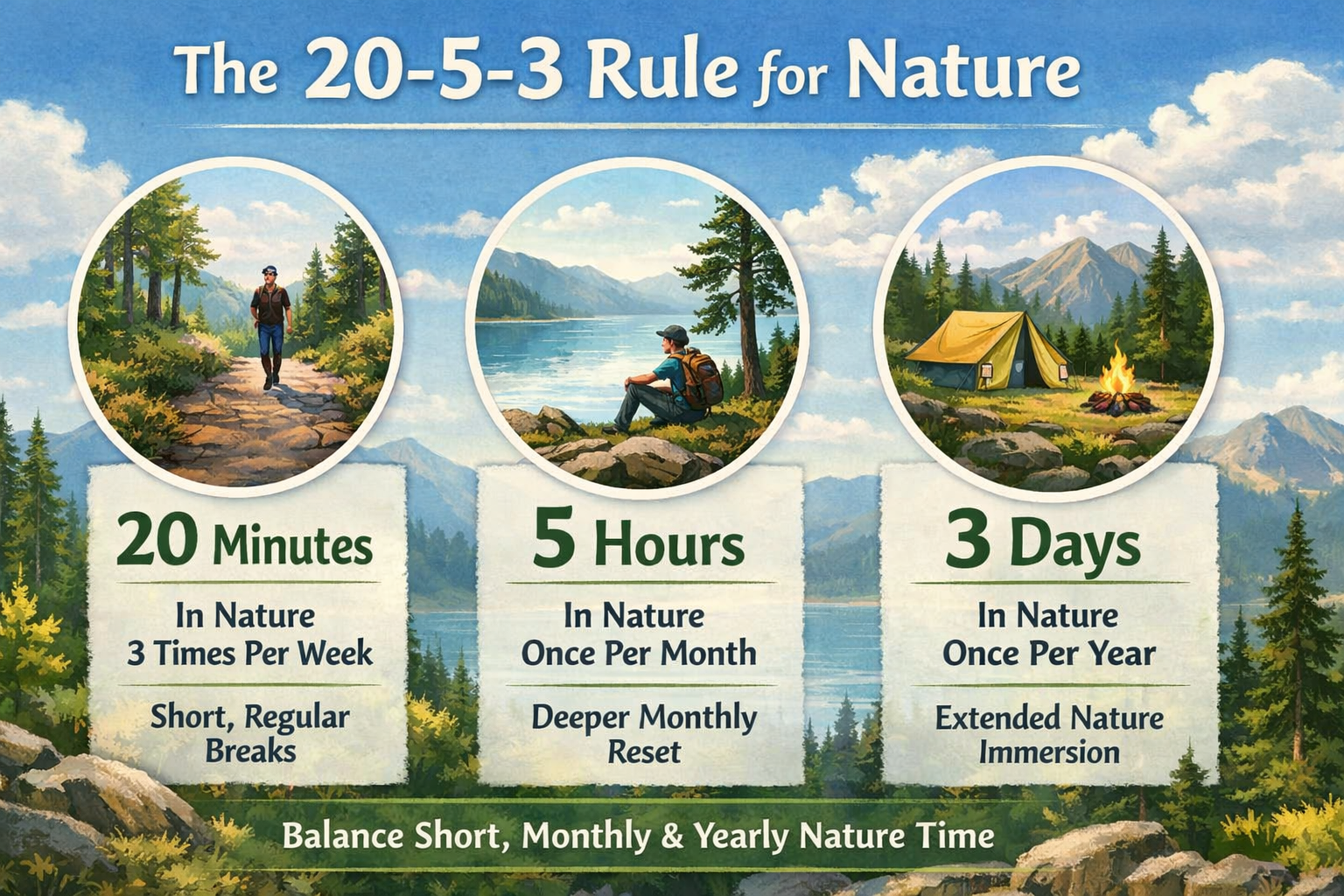
The 20-5-3 rule includes:
- 20 minutes in nature at least three times per week
- 5 hours in nature once per month
- 3 days in nature once per year
Each level serves a different purpose and supports well being in a unique way.
The 20 Minutes: Short, Regular Nature Time
The first part of the rule focuses on consistency. Spending 20 minutes in nature several times a week helps reduce daily stress and mental fatigue. This does not need to involve intense activity or travel.
Examples of 20 minute nature time include:
- Walking in a park or natural area
- Sitting outside in a quiet space
- Spending time near trees or open landscapes
- Taking a slow walk without distractions
These short sessions help the nervous system reset and can improve focus, mood, and emotional regulation.
The 5 Hours: Deeper Monthly Reset
The second part of the rule encourages longer, less frequent exposure. Five hours in nature once a month allows for deeper mental recovery and perspective.
This might include:
- A half day hike or outdoor excursion
- Spending several hours at a lake or trail
- A long afternoon outdoors without a strict schedule
- Extended time in a quiet natural setting
This level of exposure supports creativity, reflection, and emotional balance beyond what short sessions provide.
The 3 Days: Annual Immersion
The final part of the rule focuses on immersion. Spending three days in nature once a year allows the mind and body to fully disconnect from daily routines and constant stimulation.
This could involve:
- A camping trip
- A cabin stay
- Time in a remote natural area
- A multi day outdoor retreat
Extended time away from urban environments helps reinforce the benefits of nature and often leads to lasting mental clarity.
Why the 20-5-3 Rule Works
The strength of the 20-5-3 rule lies in its balance. It combines small, regular habits with occasional deeper experiences. This mirrors how the human nervous system responds best to rest and recovery.
Rather than relying on rare vacations alone, the rule encourages nature as a consistent part of life.
Benefits often include:
- Reduced stress and anxiety
- Improved focus and attention
- Better emotional regulation
- Increased sense of calm and perspective

You Do Not Have to Follow It Perfectly
The 20-5-3 rule is a guideline, not a requirement. Missing a week or adjusting timing does not remove the benefits. The goal is awareness and intention, not strict compliance.
Even partial use of the rule can improve how often and how deeply people engage with nature.
Making the Rule Work in Daily Life
To apply the 20-5-3 rule realistically:
- Schedule short outdoor breaks during the week
- Plan one longer outdoor day each month
- Treat the annual three day experience as a priority, not an extra
Small planning decisions make nature time easier to maintain.
Why This Rule Matters Today
Many people spend most of their time indoors or on screens. The 20-5-3 rule offers a simple framework to counterbalance that reality without requiring drastic change.
By encouraging regular and meaningful outdoor time, the rule supports long term mental and emotional health.
Final Thoughts
The 20-5-3 rule for nature is not about perfection or performance. It is about creating a rhythm that brings nature back into everyday life. Through small moments, longer breaks, and occasional immersion, people can experience the calming and restorative effects of the natural world in a sustainable way.



%20(446%20x%20128%20px)%20(306%20x%20105%20px)%20(2)%20(1).webp)


