
Understanding A5 Zoning on Our Properties
When browsing land listings, zoning labels can feel confusing or overly technical. One of the most common zoning designations buyers see on our listings is A5 zoning. Understanding what A5 zoning means is important because it directly affects how you can use the land, what you can build, and how flexible your ownership will be.
This guide explains what A5 zoning typically allows, why it’s common on our properties, and what buyers should consider before purchasing.
What Is A5 Zoning?
A5 zoning is an agricultural zoning classification that generally allows low-density land use across larger parcels. While exact rules vary by county, A5 zoning is designed to preserve open space, support agricultural activity, and limit overdevelopment.
On many rural Utah properties, A5 zoning provides flexibility without the density or restrictions found in residential subdivisions or HOA-controlled areas. This makes it appealing to buyers who want land for recreation, long-term holding, or future building.
What Can You Do With A5-Zoned Land?
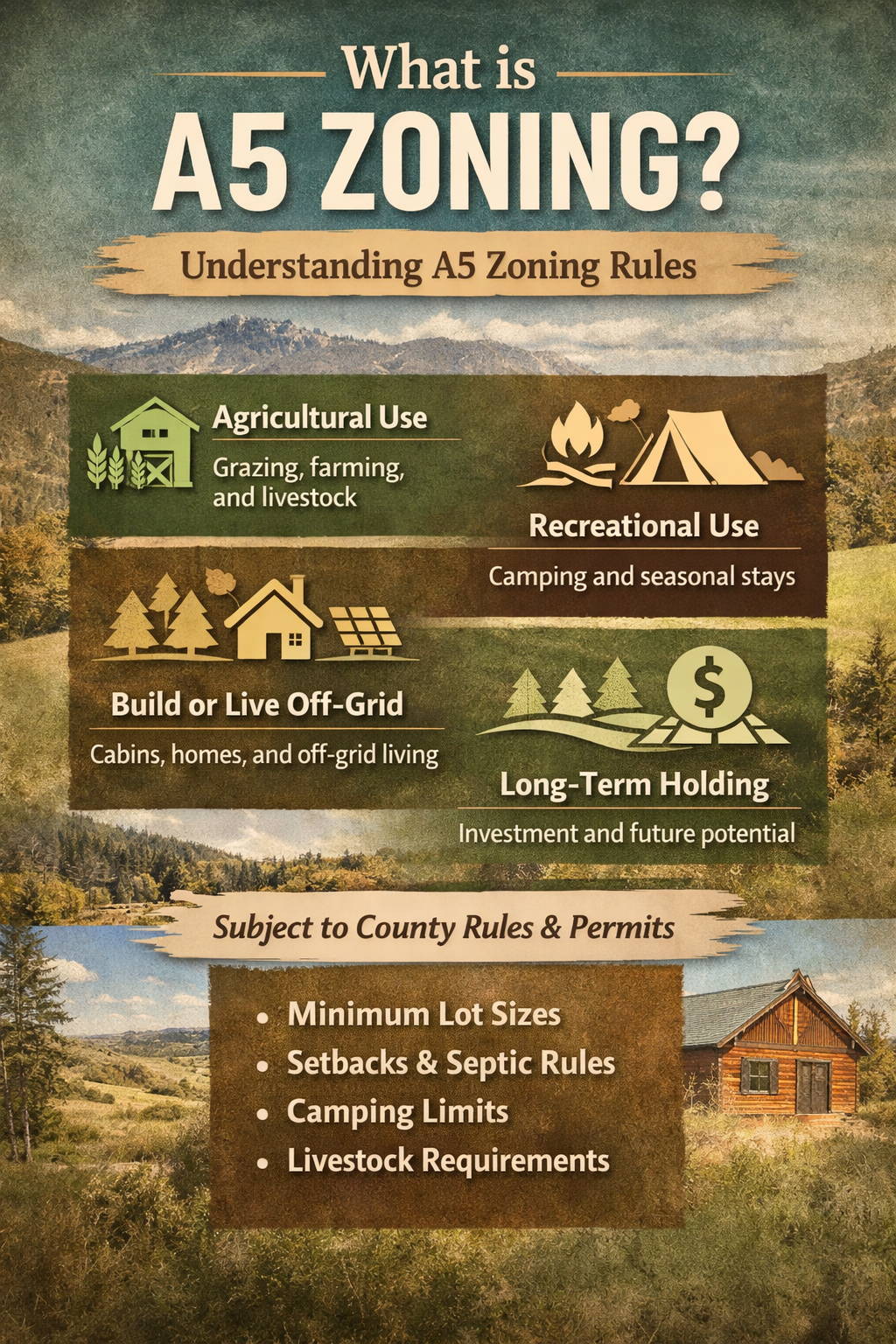
A5 zoning is popular because it supports a wide range of uses while maintaining rural character. In many counties, A5-zoned land allows for:
Agricultural or grazing use
Recreational use such as camping or seasonal stays
Building a home or cabin, subject to county requirements
Off-grid living with approved systems
Long-term land holding or investment
Specific allowances depend on county ordinances, but A5 zoning is generally considered one of the more flexible rural designations.
Building on A5-Zoned Properties
Many buyers ask whether they can build on A5-zoned land. In most cases, residential construction is allowed, but there are usually requirements tied to minimum acreage, setbacks, and septic approval. Utilities are often not in place, so building plans should account for off-grid or self-managed systems.
A5 zoning is well-suited for buyers who want to build gradually rather than immediately. It allows landowners to plan, improve access, and develop over time instead of following strict construction timelines.
Camping and Recreational Use Under A5 Zoning
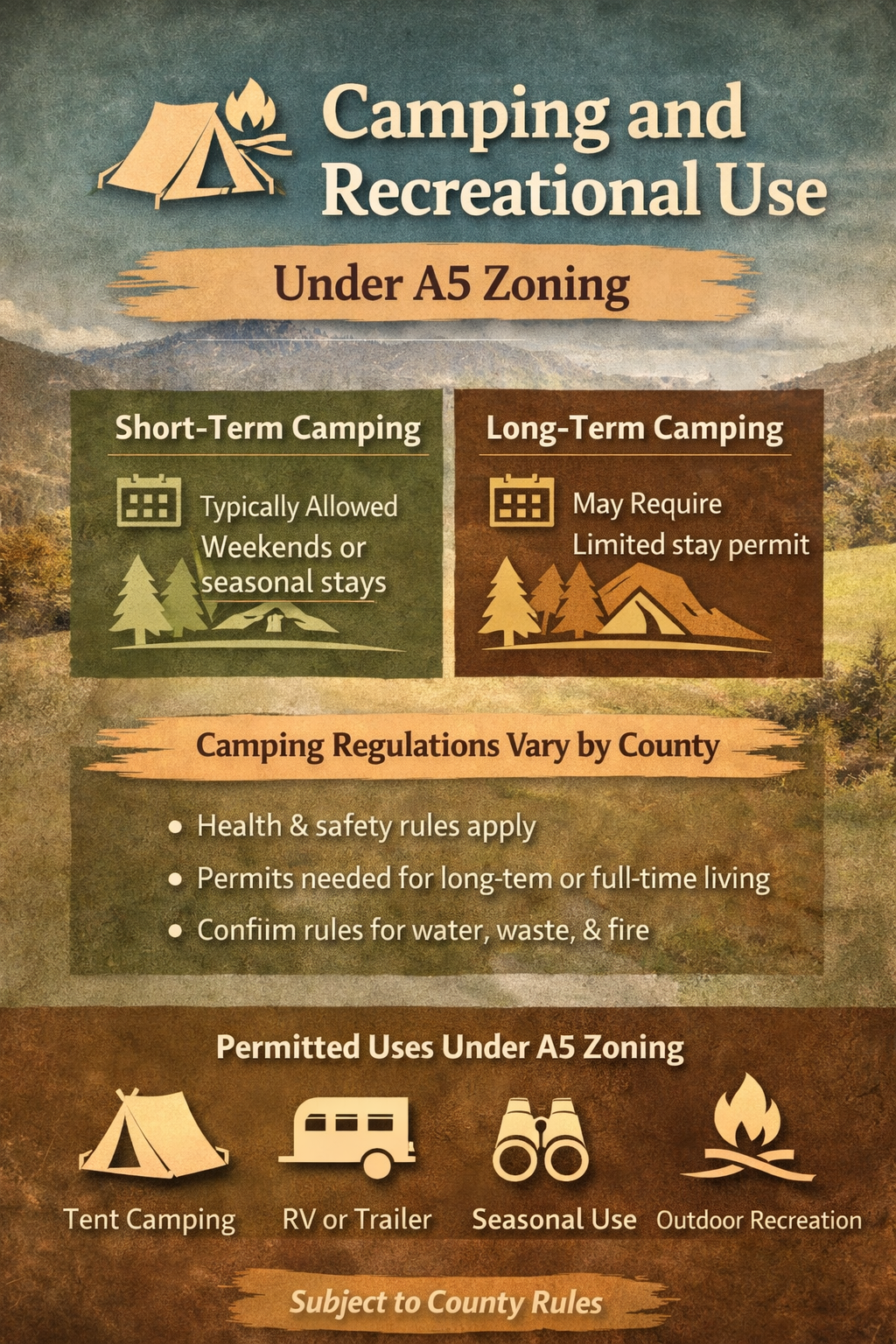
Camping is one of the most common uses buyers want when purchasing A5-zoned land. In many counties, A5 zoning allows short-term or seasonal camping, especially for recreational use. Long-term or full-time camping may require permits or additional approvals, depending on county health and safety rules.
This flexibility makes A5 zoning attractive to buyers who want to use the land right away while planning future improvements.
Livestock and Agricultural Use
Because A5 zoning falls under agricultural classifications, it often allows livestock, grazing, and small-scale agricultural activity. Requirements can include minimum acreage per animal, fencing rules, and water access considerations.
For buyers interested in hobby farming or keeping animals, A5 zoning provides options that are not typically available in residential zones.
Why A5 Zoning Is Common on Our Properties
At Mountains West Ranches, many of our properties are located in rural areas where A5 zoning aligns with how buyers actually want to use the land. These parcels are designed for flexibility, privacy, and long-term ownership rather than dense development.
A5 zoning allows buyers to:
Use the land recreationally
Hold the land long term
Build when they are ready
Avoid HOA restrictions
This makes it a practical option for out-of-state buyers, recreational landowners, and future builders.
What A5 Zoning Does Not Mean
A5 zoning does not mean unrestricted use. County rules still apply, and certain activities may require permits or approvals. Buyers should not assume commercial development, high-density housing, or unlimited long-term RV living is automatically allowed.
Understanding the boundaries of A5 zoning helps buyers plan realistically and avoid misunderstandings later.
Why County Rules Matter
Although A5 zoning is a common designation, specific regulations are set at the county level. Minimum lot sizes, building allowances, camping rules, and agricultural limits can vary. Two A5-zoned parcels in different counties may have slightly different requirements.
This is why verifying county-specific rules is always recommended before making long-term plans.
Is A5 Zoning Right for You?
A5 zoning works well for buyers who value flexibility, privacy, and control over how their land is used. It is ideal for recreational buyers, future builders, off-grid planners, and those looking to hold land as a long-term asset.
If your goal is to own land without tight development timelines or HOA oversight, A5 zoning is often a strong fit.
Final Thoughts
A5 zoning offers a balance between freedom and structure. It allows land to remain usable, adaptable, and aligned with rural lifestyles while still following county regulations. Understanding how A5 zoning works helps buyers make informed decisions and set realistic expectations for land ownership.
If you are considering one of our A5-zoned properties and want clarity on what is allowed, understanding zoning upfront is one of the most important steps you can take.