.webp)

Owner financing is a financing arrangement where the seller of the land acts as the lender. Instead of borrowing money from a bank, the buyer makes payments directly to the seller based on agreed-upon terms. These terms usually include a down payment, a fixed interest rate, a monthly payment amount, and a loan term. Once the agreement is finalized, the buyer begins making payments while gaining rights to use the land according to the contract.
This type of financing removes the need for bank approval and underwriting, which makes it appealing for buyers who want a simpler and faster purchasing process. Owner financing is especially common with rural and recreational land because sellers understand that traditional financing is often difficult to obtain for these properties.
Bank financing involves obtaining a loan from a traditional lender such as a bank or credit union. The lender evaluates both the buyer and the land itself before approving the loan. This includes reviewing credit history, income, debt levels, and the intended use of the property. In addition, the land must meet specific criteria related to access, zoning, and marketability.
Because land does not generate income on its own and is harder to resell than a home, banks view land loans as higher risk. As a result, fewer banks offer land loans, and those that do often impose stricter requirements. This makes bank financing less accessible for many land buyers, particularly those purchasing raw or off-grid property.

Owner financing typically offers far more flexibility in the approval process. Many sellers do not require high credit scores or extensive income documentation, focusing instead on the buyer’s down payment and ability to make consistent monthly payments. This allows buyers with self-employment income, recent career changes, or limited credit history to move forward.
Bank financing, on the other hand, relies heavily on traditional lending criteria. Buyers are usually required to have strong credit, stable income, and a low debt-to-income ratio. The land itself must also meet the bank’s standards, which can exclude many rural or undeveloped parcels.
Down payment requirements vary widely depending on the financing method. With owner financing, down payments are often lower and more flexible. Sellers may structure payments in a way that works for both parties, allowing buyers to preserve cash for improvements or future plans.
Bank financing generally requires higher down payments for land purchases. It is common for banks to require 20 to 50 percent down, especially for raw land. This higher upfront cost can be a barrier for buyers who are otherwise financially prepared.
Interest rates for owner-financed land are often higher than bank loans, reflecting the increased risk taken on by the seller. Loan terms may also be shorter, which can result in higher monthly payments. However, these terms are usually fixed, offering predictable payments over the life of the loan.
Bank financing typically offers lower interest rates and longer repayment terms, which can reduce monthly costs over time. The tradeoff is that fewer buyers qualify, and the approval process is much more involved.
One of the biggest advantages of owner financing is speed. Without bank underwriting, appraisals, and multiple layers of approval, transactions can close much faster. This is especially helpful in competitive markets or when buyers want to secure land quickly.
Bank financing is slower and more complex. The process often includes appraisals, inspections, lender reviews, and additional documentation, which can extend timelines significantly. Delays are common, and approvals are not guaranteed.
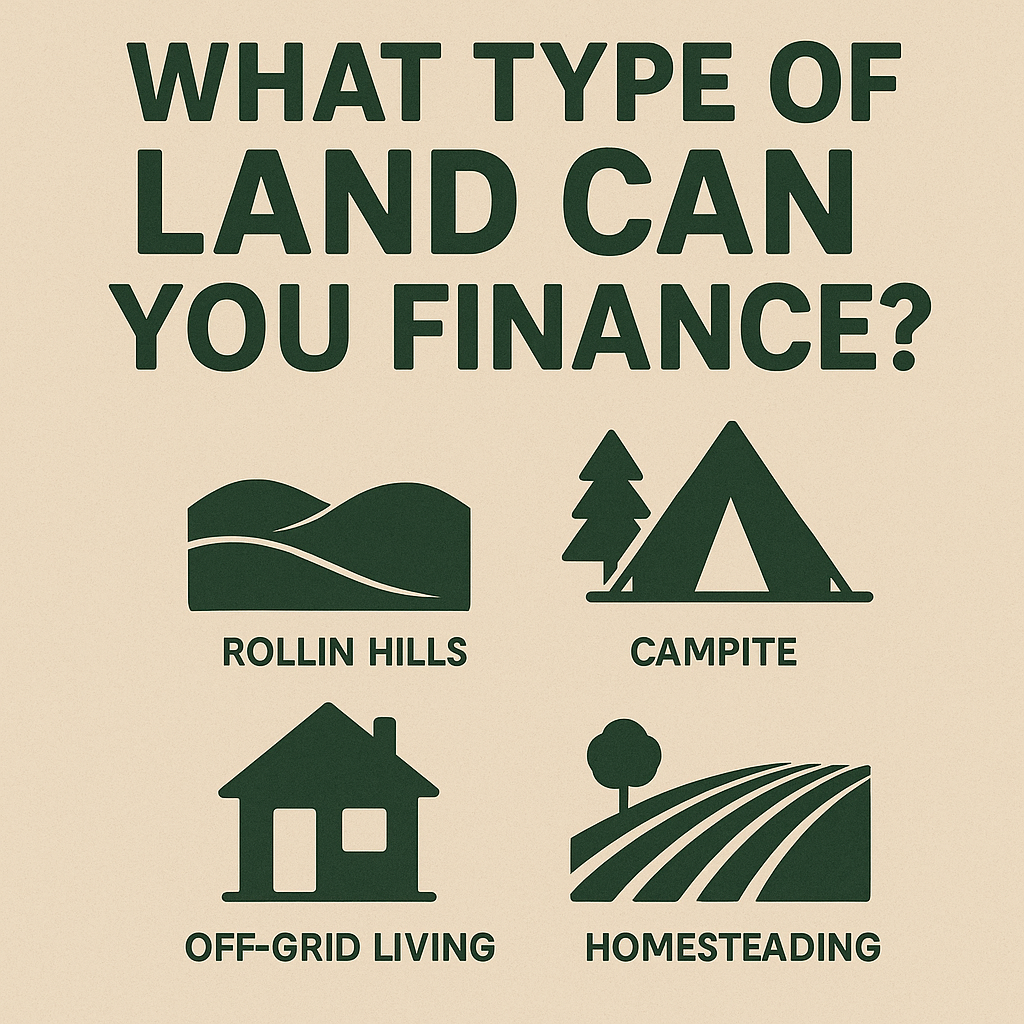
Owner financing works well for buyers who want flexibility and speed. It is often ideal for those purchasing rural or recreational land, buyers with non-traditional income, or individuals who prefer a straightforward approval process without extensive documentation. It also suits buyers who want predictable monthly payments and the ability to move forward without waiting on bank decisions.
Bank financing may be the right choice for buyers with strong credit, stable income, and access to higher down payments. It is often better suited for improved land or buyers who plan to hold the property long term and want to minimize interest costs over time. For those who qualify, bank loans can offer long-term savings despite the stricter requirements.
Rural land often lacks the features banks prefer, such as utilities, paved roads, or nearby development. These factors increase perceived risk from a lending standpoint. Owner financing fills this gap by allowing sellers to offer terms that reflect the actual use and value of the land rather than rigid lending standards.
This is why many rural land listings emphasize owner financing as a primary selling point. It expands the pool of potential buyers and allows transactions to happen that would otherwise stall under traditional financing rules.
Before committing to either option, buyers should understand the full financial picture. This includes asking about the total cost of the land over the life of the loan, whether there are penalties for early payoff, how late payments are handled, and when legal ownership transfers. These details vary by agreement and can significantly impact long-term affordability.
Choosing between owner financing and bank financing for land depends on your financial situation, timeline, and goals for the property. Owner financing offers accessibility, flexibility, and speed, making it a strong option for many rural land buyers. Bank financing can offer lower long-term costs for qualified buyers but comes with stricter requirements and longer timelines.
Understanding these differences upfront helps buyers avoid delays and choose a financing option that supports both their budget and their plans for the land.