.webp)
Please double check all sources, this blog post is purely informational.
Off grid living has become increasingly popular as more people look for independence, flexibility, and a lifestyle less tied to public utilities. However, one of the most common questions buyers ask is whether off grid living is actually legal and which states allow it. The answer is not always simple, because off grid rules depend on a combination of state laws, county regulations, and local zoning.
In most cases, off grid living is allowed in many states, but the level of difficulty and flexibility varies widely. Understanding where off grid living is realistic helps buyers choose land that supports their long term plans instead of working against them.
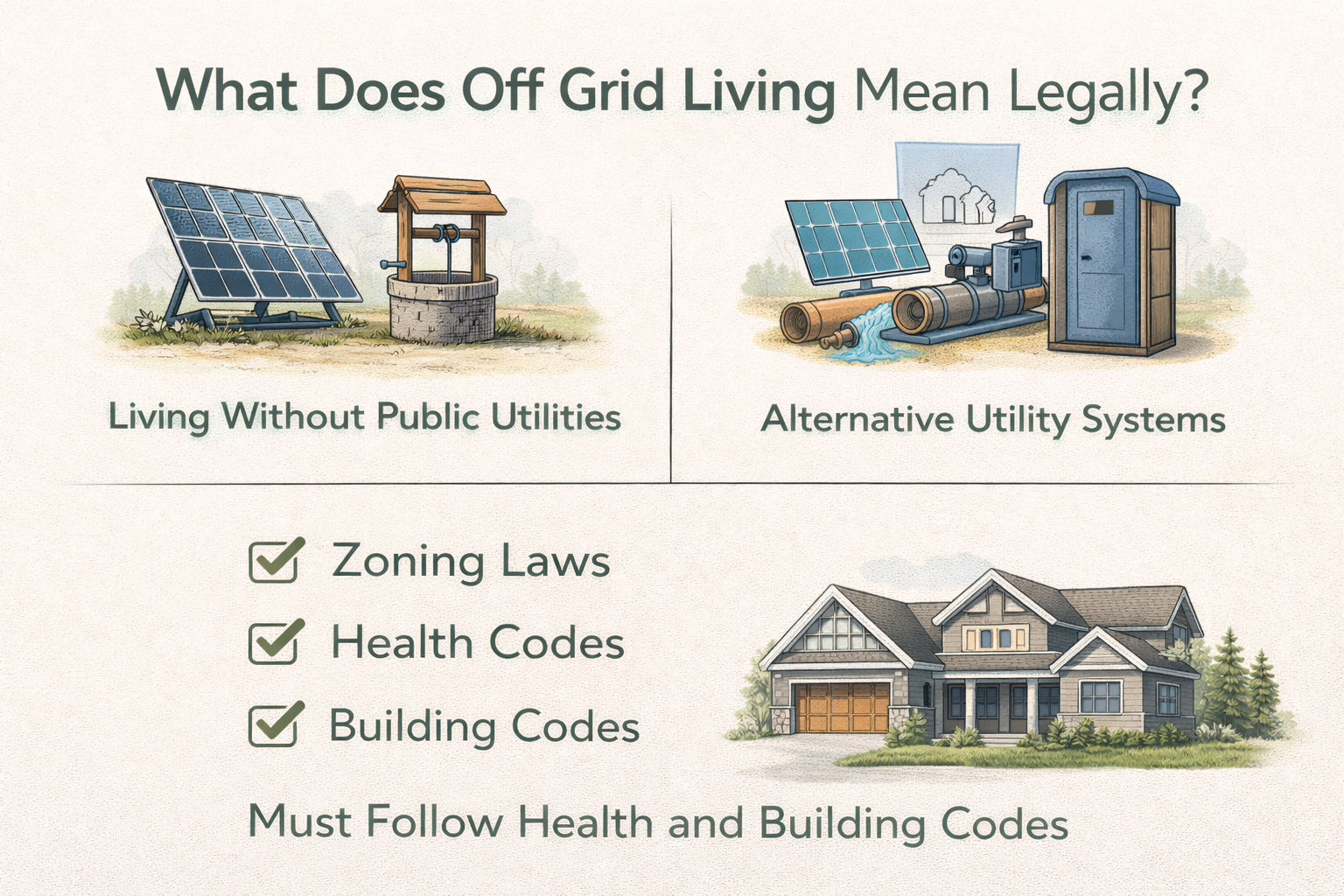
Off grid living generally means living without relying on public utilities such as municipal power, water, or sewer systems. This often includes using solar or wind power, wells or hauled water, septic systems, composting toilets, and alternative heating sources.
From a legal standpoint, off grid living does not mean living without rules. Even in off grid friendly states, buyers must still comply with health codes, building requirements, zoning laws, and environmental regulations. The key difference is how flexible those rules are.
Some states are widely recognized as being more supportive of off grid living due to relaxed zoning, large rural areas, and flexible building codes. These states often allow alternative utility systems and offer rural land options with fewer restrictions.
Common off grid friendly states include:
These states tend to have large rural counties where off grid systems are common and accepted, especially outside city limits.
Utah is one of the most popular states for off grid buyers because of its wide availability of rural land and flexible county level regulations. Many counties allow off grid systems such as solar power, wells, hauled water, and septic installations, especially on agricultural or recreational land.
Utah also offers large parcel sizes, lower land prices in rural areas, and zoning that supports camping, cabins, and gradual development. While requirements vary by county, many buyers are able to live off grid legally with proper planning and permits.
Arizona and New Mexico are both well known for off grid living, particularly in desert and high desert regions. Solar power is highly effective in these states due to consistent sunlight, and many rural properties are already set up for off grid use.
Counties in these states often allow alternative water solutions and non traditional building methods. However, water rights and well regulations should be carefully reviewed before purchasing land.
These states appeal to buyers who want colder climates, larger acreage, and fewer neighbors. Off grid living is common in rural Idaho, Montana, and Wyoming, especially in mountainous and agricultural areas.
Zoning is typically handled at the county level, and many counties allow off grid systems as long as basic health and safety requirements are met. Seasonal access and winter conditions should be considered when planning utilities and access.
Alaska is often viewed as the most off grid friendly state due to its remote nature and limited infrastructure. Many residents rely entirely on off grid systems, and building requirements are minimal in remote areas.
However, Alaska presents unique challenges such as extreme weather, limited access, and high costs for materials. It is best suited for buyers with significant off grid experience.
Some states allow off grid living but make it more difficult due to stricter building codes, utility requirements, or local enforcement. These states often require connections to municipal utilities when available.
States that tend to be more restrictive include:
In these states, off grid living is still possible in some rural areas, but buyers must be prepared for more permits and inspections.

One of the biggest misconceptions about off grid living is that state laws alone determine what is allowed. In reality, county zoning and local health departments often have the final say.
Two properties in the same state can have completely different off grid rules depending on county regulations. Buyers should always verify zoning, building requirements, and utility expectations at the county level before purchasing land.
Before committing to land, buyers should confirm several key factors to avoid future problems.
Important items to review include:
Working with a local land specialist helps clarify these details early.
Off grid living offers freedom, flexibility, and independence, but it also requires planning and responsibility. Buyers who value control over utilities, lower monthly expenses, and a connection to the land often find off grid living rewarding.
Those who need immediate services, close access to cities, or minimal setup may find off grid living more challenging. Understanding your priorities helps determine whether this lifestyle fits your goals.
Many states allow off grid living, but success depends on choosing the right land in the right location. Rural states with flexible county regulations offer the best opportunities, especially when buyers understand zoning, utilities, and access before purchasing.
With proper planning and realistic expectations, off grid living is not only legal in many states but also a practical option for long term land ownership.