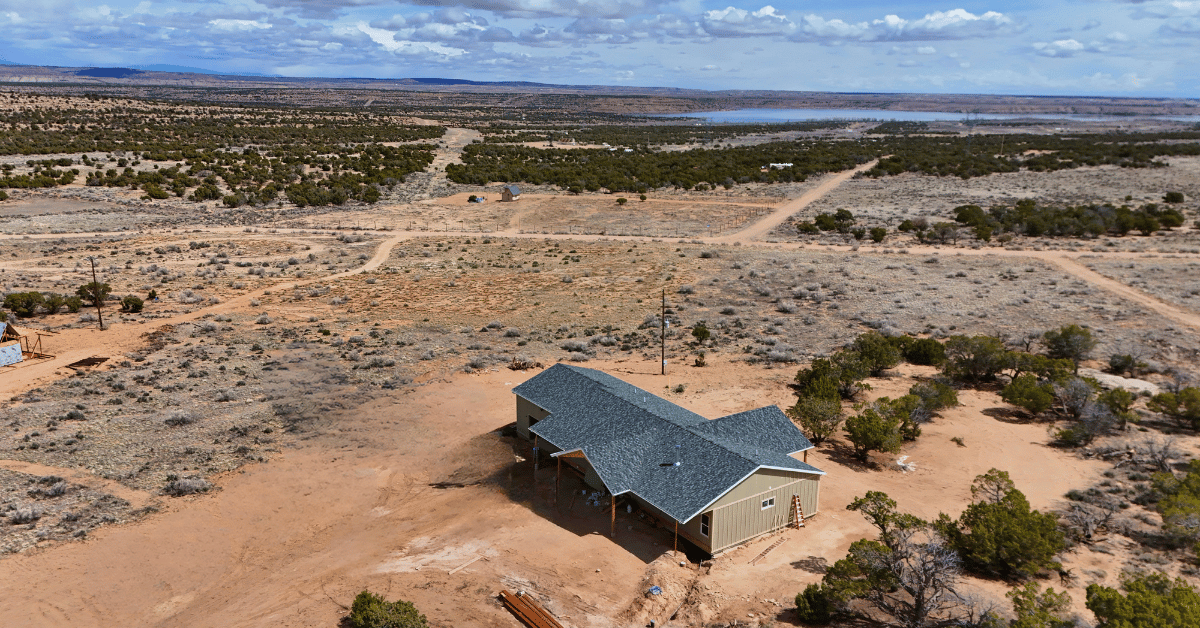
.webp)
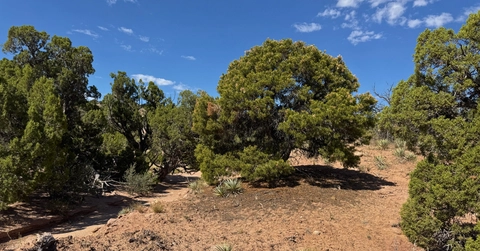
Buying land in Utah remains a strategic option for buyers who want long term flexibility, asset control, and insulation from the volatility of the housing market. Unlike homes, land does not force immediate decisions around occupancy, renovation, or resale. This allows buyers to think in years instead of months. In 2025, this flexibility is one of land’s biggest advantages.
Utah continues to see population growth, out of state interest, and steady demand for outdoor driven lifestyles. While housing affordability has tightened, land pricing in many counties has remained more accessible, especially outside major metro areas. That does not mean every parcel is a good purchase. The value of land depends heavily on research, location, and buyer intent.
Wasatch County offers proximity to Heber Valley, recreation, and growing residential infrastructure, but land conditions vary significantly from parcel to parcel. Buyers who take the time to evaluate the following factors are far more likely to avoid costly mistakes.
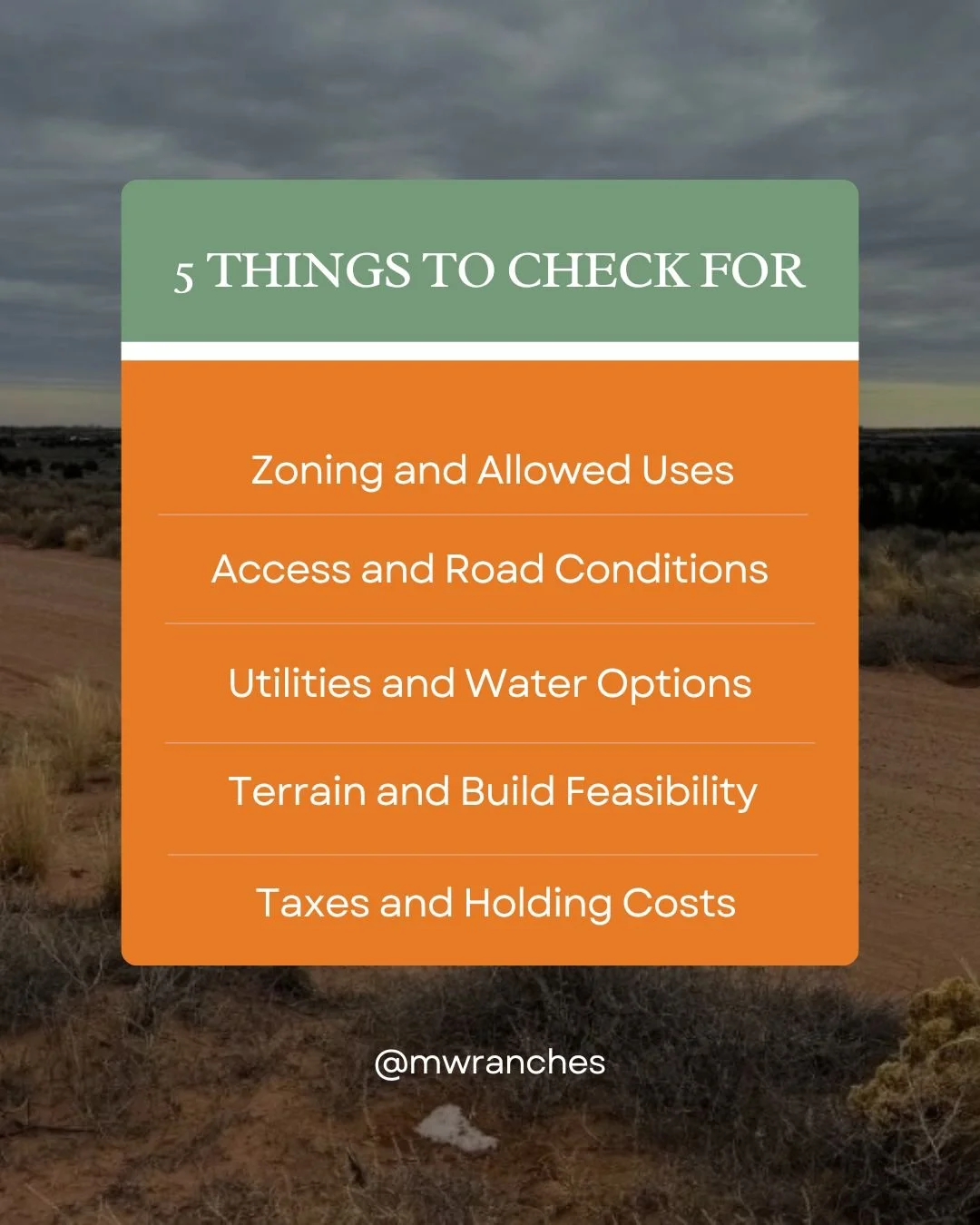
Zoning is one of the most important factors in determining whether land will meet your goals. In Wasatch County, zoning can dictate whether you are allowed to build a full time residence, use the land seasonally, camp, place an RV, or operate agricultural activities. Some zones appear flexible but include minimum square footage requirements, building timelines, or restrictions on temporary structures.
Buyers should confirm zoning directly with county planning resources rather than relying on assumptions or listing language. Even two parcels within the same subdivision may fall under different zoning overlays or development rules.
Access affects both usability and future value. Some parcels in Wasatch County are accessed by paved county roads, while others rely on dirt roads or easements that may not be maintained year round. Winter access is especially important in mountain areas, where snow can limit reachability for several months.
Legal access matters just as much as physical access. A parcel must have recorded access through a public road or documented easement. Landlocked parcels are difficult to finance, insure, or resell.
Utility availability varies widely across Wasatch County. Some parcels are near power lines and water connections, while others require off grid solutions. Buyers should determine whether electricity can be extended, whether a well is permitted, or whether water hauling is realistic for their intended use.
Septic feasibility should also be evaluated early. Soil type, slope, and setback requirements can affect whether a septic system can be installed. Understanding these constraints ahead of time prevents delays and unexpected costs later.
The physical characteristics of the land play a major role in its usability. Steep slopes, rocky soil, flood zones, or irregular shapes can limit where structures can be placed. Even parcels with ample acreage may have only a small buildable area.
Buyers should consider how the land would realistically be used, including where a driveway, building pad, and septic system would go. Flat, accessible land generally retains value better and offers more flexibility for future development.
While land does not come with mortgage level expenses, it still carries ongoing costs. Property taxes vary by classification and location, and some parcels include road maintenance agreements or HOA fees. These costs are usually manageable, but they should be factored into long term planning.
Holding land is often affordable, but buyers should plan for annual expenses, especially if the property will be held for several years before development or resale.
Land investment in 2025 works best when you go into it with clear expectations and a bit of patience. While some areas do see faster price jumps, land usually is not about quick wins. It tends to reward people who are thinking a few years ahead rather than trying to time the market. Buyers who pay attention to practical things like access, flexible zoning, and how close the land is to growing areas usually have an easier time holding value and reselling down the road.
Utah is a good example of why land can make sense long term. There is only so much buildable land available, water limitations slow overdevelopment, and people keep moving into the state. That combination helps support steady demand without the extreme swings you sometimes see in housing markets. Counties that grow at a manageable pace often feel less risky because they are not trying to expand too fast or overbuild all at once.
Housing affordability and interest rates have pushed many buyers to reconsider traditional homeownership. Land offers a different entry point with fewer immediate financial pressures.
Land usually costs less to get into than buying a home, which is a big reason many buyers start there. Down payments tend to be lower, and there is no pressure to budget for inspections, repairs, or fixing things right away. You are not stepping into a property that needs work or surprise expenses on day one. Instead, buyers can secure the land now and take their time planning a build later, when finances feel more comfortable or market conditions make more sense.Control Over Timing
One of the biggest advantages of land is timing flexibility. Buyers are not forced to build immediately and can wait until finances, permits, or market conditions align. This makes land especially attractive to buyers with long term plans.
Buying land usually feels less stressful than buying a home. There is often less emotional competition, fewer rushed decisions, and not the same pressure to outbid other buyers immediately. This gives people more time to slow down, do their homework, ask questions, and think through how the property actually fits their plans. That extra breathing room often leads to smarter, more confident decisions instead of reactive ones.
Knowing where people tend to go wrong can save you a lot of time, money, and frustration. Learning from common mistakes ahead of time makes it easier to avoid issues that are expensive or difficult to fix later.
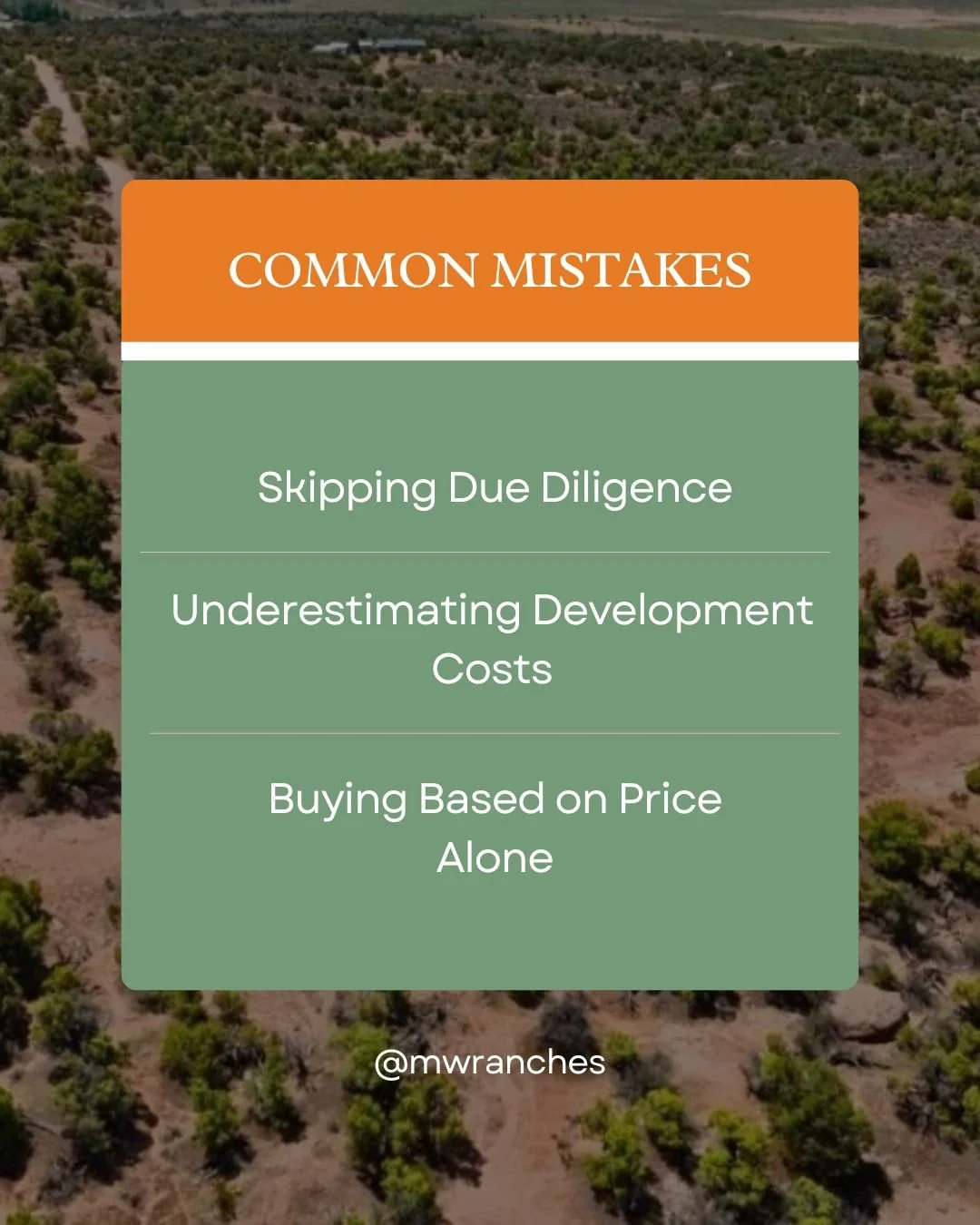
One of the most common mistakes buyers make is assuming that land is automatically usable just because it is listed for sale. Without checking things like zoning rules, legal access, and whether utilities are realistically available, buyers can end up with land that does not actually support what they planned to do with it. Taking the time to verify these details upfront helps avoid disappointment and expensive fixes later on.
It is easy to focus on the purchase price and overlook what it actually takes to make land usable. Things like driveways, wells, septic systems, and power connections can add up quickly, and those costs change depending on the terrain, distance, and location of the property. Looking into these expenses before closing helps buyers avoid surprises and plan their budget more realistically.
Cheap land can be tempting, but there is usually a reason for the lower price. Issues like difficult access, strict zoning rules, or hard to use terrain can limit what you can actually do with the property and make it harder to sell later. Looking beyond the price and understanding what you are giving up helps buyers make decisions they will not regret
Utah has a few built in advantages that help land hold its value over time. Steady population growth, a strong outdoor focused lifestyle, and natural limits on development due to water availability and geography all work together to prevent oversupply. When land is not being overbuilt, values tend to stay more stable.
Access to recreation, nearby public land, and thoughtful county planning also play a big role in long term demand. Areas that grow at a measured pace usually feel more sustainable for buyers and investors alike. Parcels that allow for multiple uses often stand out because they give future owners more options, which can make them easier to hold and resell compared to properties with tighter restrictions.
Land ownership is not the right fit for every buyer, but for certain people, it makes a lot of sense in today’s market. The key is understanding whether your goals, timeline, and expectations line up with what land ownership actually offers. For buyers who value flexibility and long term planning, land can be a strong option.
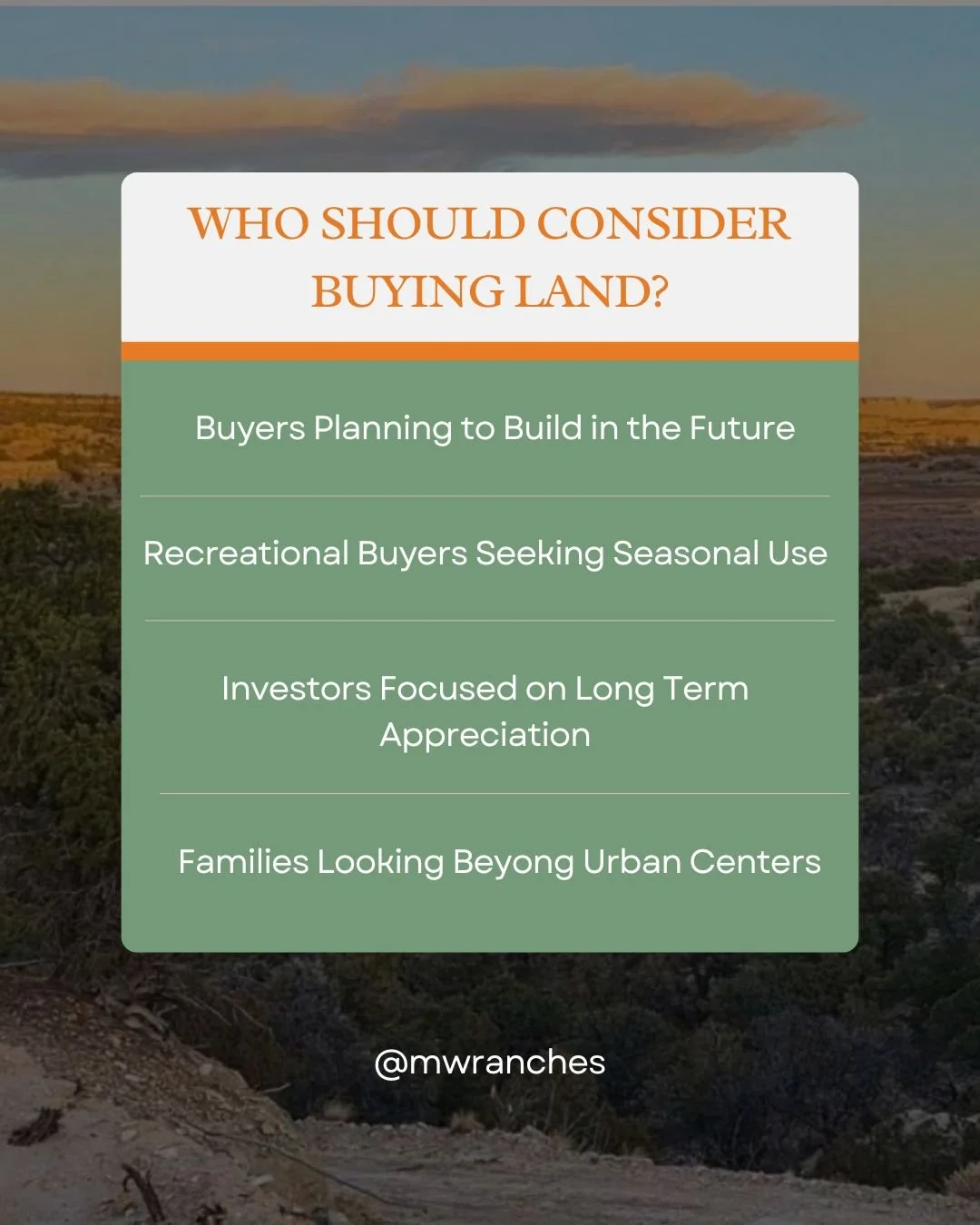
For buyers who eventually want to build but are not ready to start construction right away, buying land now can be a smart first step. Securing the land early allows buyers to lock in location and price while waiting for construction costs, material pricing, or interest rates to improve. It also removes the pressure to rush into a build before finances or plans feel fully settled.
Land works well for buyers who want a place to escape, camp, or spend time outdoors without committing to a full time residence. Properties near mountains, reservoirs, or public land offer ongoing enjoyment while still holding resale appeal. Many recreational buyers appreciate the ability to use the land immediately while keeping long term options open.
Land is often best suited for investors who are comfortable with a longer timeline. Rather than aiming for quick returns, these buyers focus on steady appreciation driven by location, access, and future demand. Land can serve as a low maintenance asset that quietly grows in value without the day to day involvement required by rental properties.
Families who want more space, privacy, and control over their environment often find land ownership appealing. Rural and semi rural parcels allow families to plan homes that fit their lifestyle rather than adapting to city constraints. For many, land represents not just an investment, but a long term vision for how and where they want to live.
Buying land in Utah can be a smart move in 2025 when guided by clear goals, proper research, and realistic expectations. Land rewards patience and planning. Buyers who focus on usability, access, and long term potential are better positioned to see value over time.
Disclaimer: This article is for general informational and educational purposes only and does not constitute financial, investment, legal, or tax advice. Land values, zoning regulations, utility availability, and market conditions vary by parcel and are subject to change. Mountains West Ranches is not a licensed financial advisor, and nothing in this article should be relied upon as a recommendation to buy, sell, or invest in any property. Before making any land purchase or investment decision, we encourage you to consult with a qualified real estate attorney, financial advisor, tax professional, and the relevant county planning office to confirm current regulations and verify property-specific details.