.webp)
How Much Money Does It Cost To Build a Family Compound?
Building a family compound can be a strategic long-term investment that combines privacy, shared resources, and multi-generational living. A family compound typically includes multiple homes or living structures on a single parcel of land, often designed to support extended family members while maintaining individual independence. While the lifestyle benefits are appealing, many buyers ask the same question first: how much does it actually cost to build a family compound?
The answer depends on several factors, including land price, construction costs, infrastructure needs, utilities, and the overall design of the compound. Costs can vary widely based on location, zoning requirements, and whether the project is built all at once or in phases. Understanding these variables early can help families plan realistically and avoid unexpected expenses.
How Much Would It Cost to Build a Family Compound?
The total cost to build a family compound is influenced by both upfront and long-term expenses. Initial costs typically include land acquisition, site preparation, home construction, utility installation, and access roads. Depending on the number of homes and level of customization, construction costs alone can range significantly.
Beyond building the structures, families must also budget for shared infrastructure such as septic systems, wells or water connections, power distribution, and internal roads. In rural areas, these infrastructure costs can add a substantial amount to the overall budget. Ongoing expenses such as property maintenance, utilities, insurance, and repairs should also be factored into the long-term cost of compound living.
While the upfront investment can be high, many families find that shared land ownership reduces costs over time. Shared utilities, combined maintenance efforts, and long-term land appreciation often make family compounds a financially practical option compared to purchasing multiple separate properties.

How Much Is a Family Compound?
The cost of a family compound varies widely depending on size, location, and amenities. A basic compound with multiple modest homes on shared land may start between $500,000 and $1 million. These projects typically include standard construction, minimal shared amenities, and basic infrastructure.
More complex compounds with custom-built homes, private roads, guest houses, workshops, and recreational features can range from $2 million to $5 million or more. Luxury family compounds may include high-end finishes, extensive landscaping, gated access, and advanced utility systems, which significantly increase overall costs.
In addition to construction, families should plan for legal costs, zoning compliance, surveys, and potential subdivision or land use requirements. Whether building from the ground up or purchasing an existing property and improving it over time, careful budgeting is essential to ensure the project remains financially sustainable.
How Much Is a Family Compound in Utah?
The cost of building a family compound in Utah depends heavily on location and land type. Rural areas generally offer lower land prices and fewer development restrictions, making them popular for compound-style living. In contrast, high-demand areas such as Park City, Salt Lake County, and resort communities come with higher land and construction costs.
Construction costs in Utah typically range from $180 to $600 per square foot, depending on materials, design complexity, and finishes. Building multiple homes on a single property can quickly raise the total investment into the seven-figure range. In premium locations, construction costs may exceed $600 per square foot before land, utilities, and landscaping are included.
Land prices also vary across the state. Large rural parcels may be available at a lower cost, while smaller parcels in urban or resort areas command higher prices. When planning a family compound in Utah, it is important to account for zoning regulations, utility availability, water rights, and access requirements, as these factors can significantly affect both cost and feasibility.
Family Compound Layout Plans
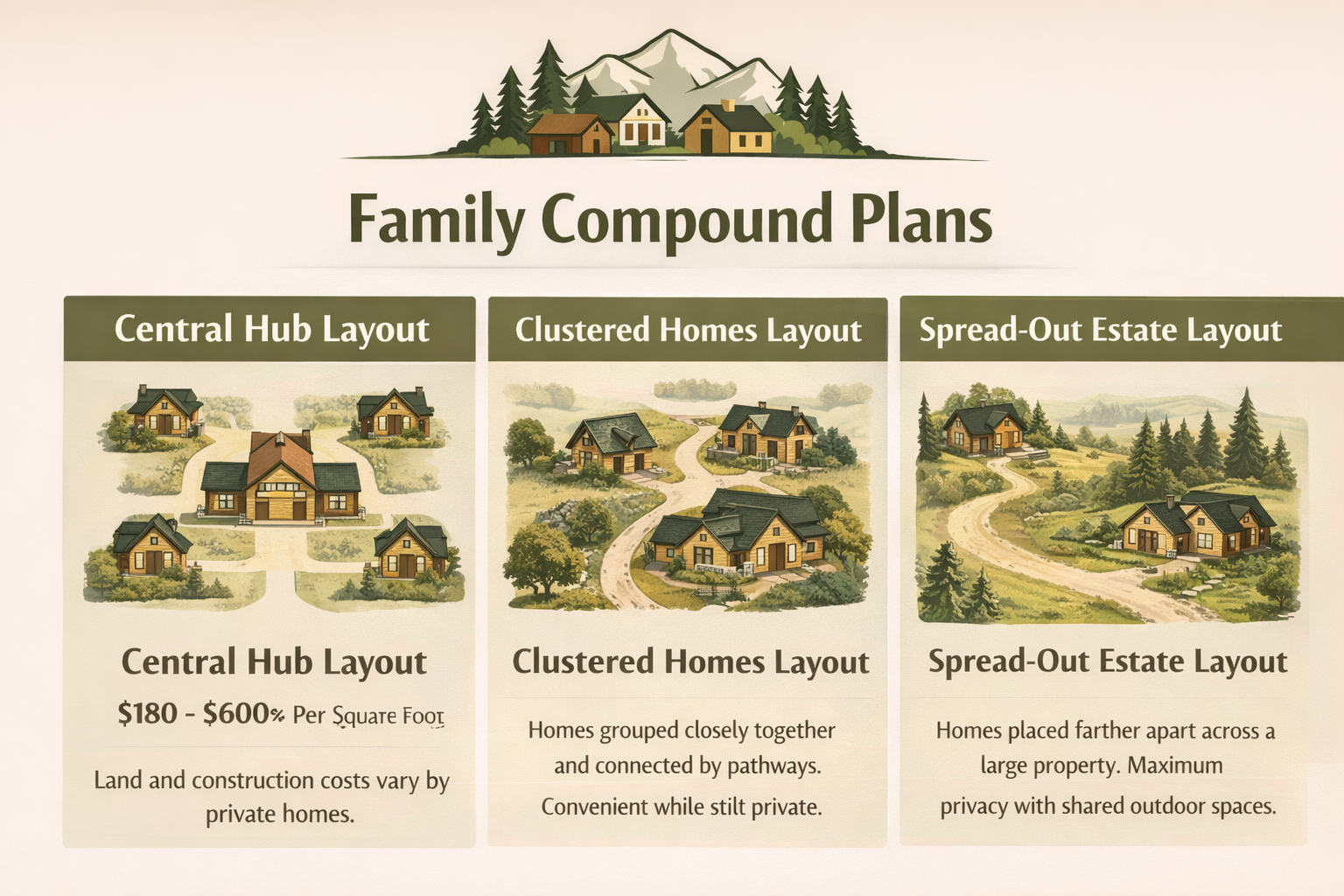
Choosing the right family compound layout is critical for functionality and long-term comfort. Layout planning should balance shared living with privacy while considering accessibility, infrastructure placement, and future expansion. The size of the land, number of households, and intended use of shared spaces all influence the final design.
A central hub layout places a shared gathering space at the center of the property, with individual homes positioned around it. This design encourages frequent interaction while keeping private living spaces separate. Clustered home layouts group residences close together, often connected by walkways or courtyards, which can reduce infrastructure costs and simplify utilities.
Spread-out estate layouts place homes farther apart across a larger property, offering greater privacy and separation. This approach works well for families who want independence while still sharing land ownership, but it may increase costs related to roads, utilities, and maintenance. Regardless of layout, planning for access, emergency services, and long-term usability is essential.
Is Building a Family Compound Worth It?
Building a family compound is a major financial and lifestyle decision, but for many families, the benefits outweigh the costs. Shared land ownership can strengthen family connections, provide long-term housing stability, and create opportunities for resource sharing. When planned carefully, a family compound can serve as a lasting asset for future generations.
From understanding construction costs to choosing the right layout and location, successful family compound planning requires research and realistic budgeting. Whether building in Utah or elsewhere, taking the time to evaluate costs, zoning rules, and long-term goals can help ensure the investment supports both financial and family priorities over time.

%20(446%20x%20128%20px)%20(306%20x%20105%20px)%20(2)%20(1).webp)


