

Cabin vs. Off Grid RV Living
Choosing how to use your rural Utah property comes down to the lifestyle you want today and the long-term plans you have for your land. Some buyers want the stability of a permanent home or cabin with utilities and long-term improvements. Others prefer the freedom, mobility, and low monthly costs that come with off-grid RV living. Both options offer access to Utah’s wide-open landscapes, star-filled nights, and peaceful acreage, but each comes with different requirements, timelines, and benefits. This guide breaks down what you can expect so you can choose the path that fits your vision.
Key Differences Between Cabins and Tiny Homes
-
![Expansive open land with no fences, or neighbors, showcasing wide skies and rugged Utah terrain.]()
1. Long-Term Stability
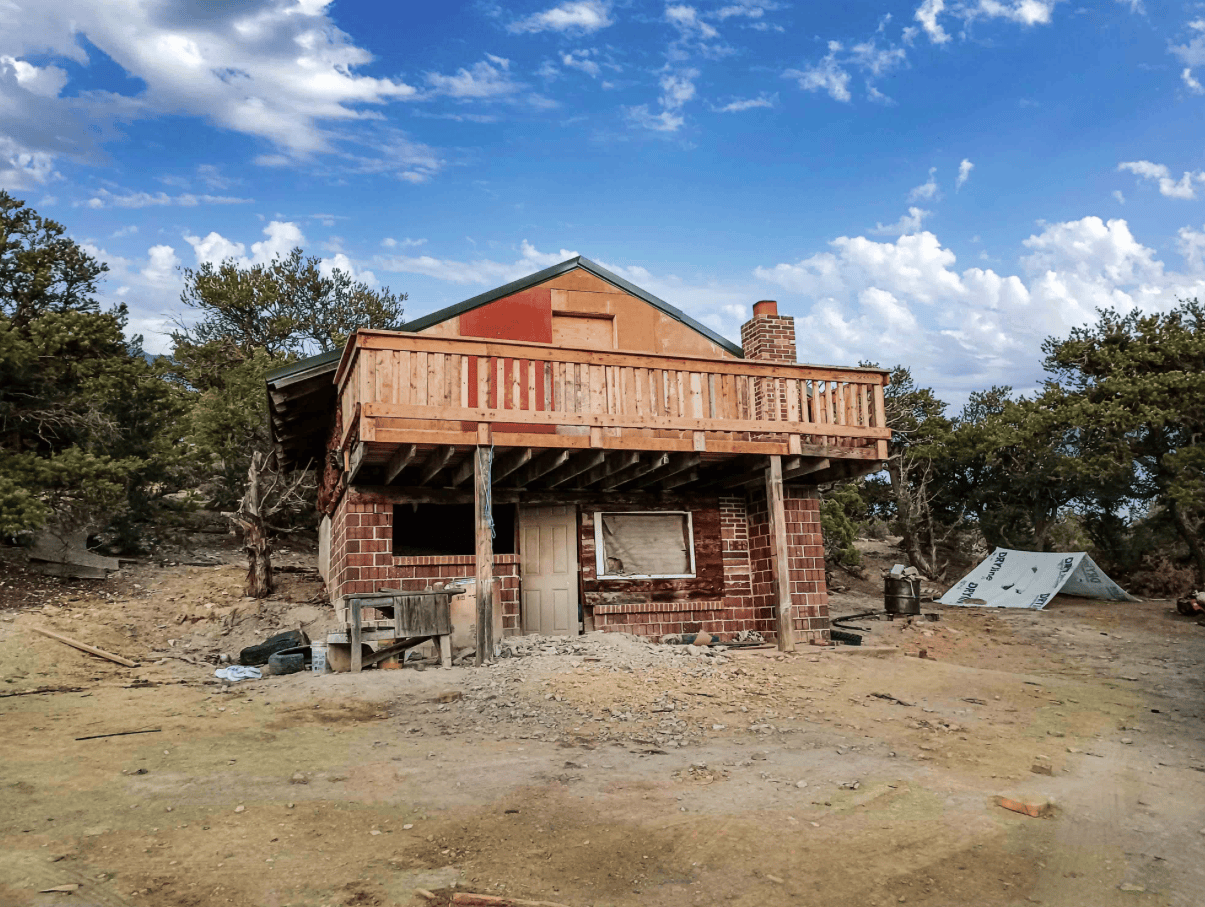
Building a permanent structure gives you a foundation for full-time living, future resale value, and long-term improvements like sheds, garages, driveways, and power hookups. Many rural Utah buyers choose this option because it creates a long-lasting homestead that can be improved over time.
-
![Large off-grid property surrounded by open space and natural scenery, offering complete privacy.]()
2. Utility Options and Comfort
A home or cabin allows you to set up utilities more easily including septic systems, wells, solar arrays, or full electrical service depending on the area. This path offers consistent comfort, more storage, and a predictable daily routine, making it ideal for families or long-term relocations.
-
![Rustic off-grid homestead with a garden, ideal for self-sufficient living.]()
3. Financing and Value
Permanent structures typically increase your property’s long-term value. Even simple cabins or modular homes can generate strong equity because improved land in Utah’s rural markets is limited. Building also gives you more flexibility to refinance or leverage the property in the future.
-
![Mountains West Ranches Fruitland office, where buyers can explore flexible financing options for off-grid land.]()
4. Ideal For:
- Buyers wanting a long-term residence
- Those planning to homestead or farm
- Investors wanting improved land
- Anyone wanting more comfort and utility reliability


Off-Grid RV Living
-
1. Flexibility and Mobility
Living in an RV on rural land offers freedom that traditional housing can’t match. You can set up camp quickly, relocate your RV as needed, and enjoy shaded areas, viewpoints, or private clearings around your property. Many buyers choose RV living while they save money or plan a future build.
-
2. Lower Upfront Costs
Instead of paying for building materials, contractors, and full utilities, off-grid RV living lets you start enjoying your land immediately. Solar panels, generators, composting toilets, and hauled water make this lifestyle surprisingly functional and affordable.
-
3. Quick Setup, Minimal Requirements
Most rural zoning in Duchesne County and surrounding areas allows RV use after signing a land contract. You can camp, bring your RV, and start enjoying the fresh air without waiting on permits or construction timelines.
-
4. Ideal For:
- Weekend or seasonal use
- Buyers saving for a future cabin
- People who prefer simple, low-cost living
- Off-grid lifestyle seekers
Building vs Off-Grid RV Living: Side-by-Side Comparison
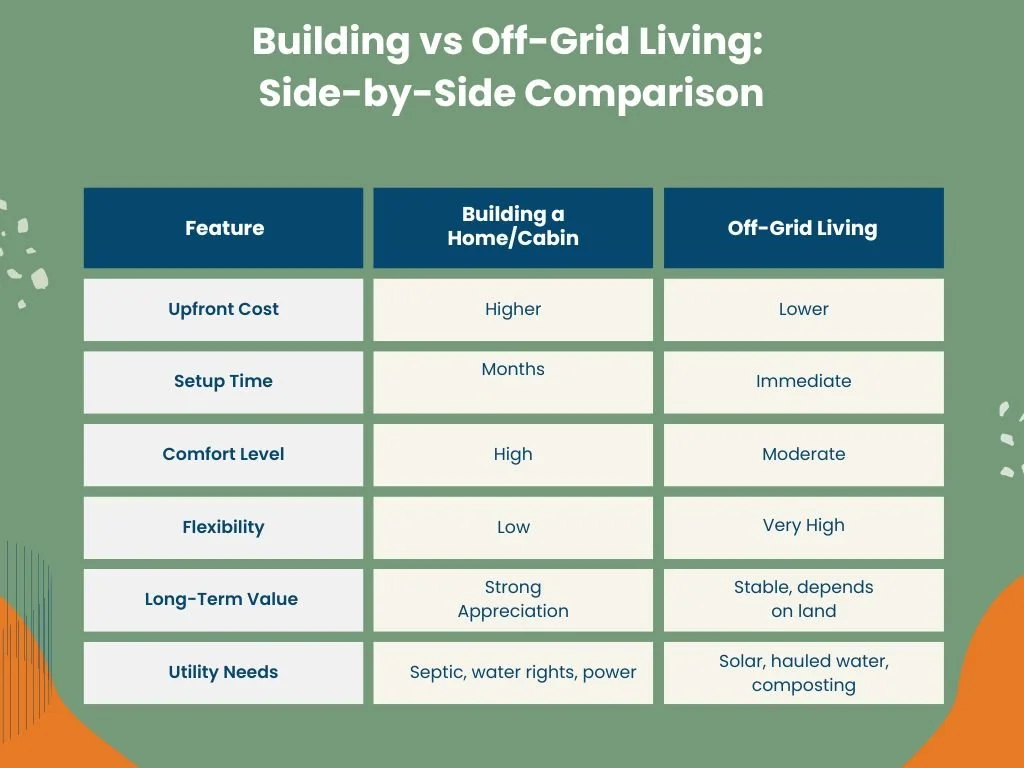
Choosing between building a home or cabin and living off-grid in an RV comes down to how quickly you want to start using your land, how much you want to invest upfront, and the lifestyle you’re aiming for. Building offers long-term comfort, stable value, and the ability to create a full-time homestead, but it requires utilities, permits, higher upfront costs, and months of preparation.
Off-grid RV living gives you immediate access to your property with far lower setup costs, maximum flexibility, and simple utility needs like solar, hauled water, and composting systems. It’s ideal for weekend use, seasonal stays, or living affordably while you save for future construction. Both options work well in Utah’s rural markets, and the right choice depends on your goals, budget, and how you plan to use your land.
Which One Fits You Best?
-
Choose Building a Home or Cabin If...
You want a permanent structure that adds long term value to the land and provides year round comfort. This route is ideal if you plan to live on the property full time, establish a homestead, or eventually pass the land down to family. It also makes sense if you prefer stable utilities, the privacy of a dedicated dwelling, and the ability to design your home exactly the way you want it. If you’re ready for the investment and have a longer timeline, building often offers the strongest long term return and the most comfortable lifestyle.
-
Choose Off-Grid RV Living If...
You want to use your land immediately with minimal setup and a lower budget. This works especially well for buyers who want a weekend basecamp, a place to stay while preparing to build later, or a flexible off-grid lifestyle that doesn’t require committing to permanent construction right away. RV living also fits buyers who enjoy mobility, simplicity, and the freedom to adjust their layout without the cost of major improvements. If your main goal is affordability, flexibility, and quick access to rural land, off-grid RV living is often the best fit.
FAQs
1. Can I live full-time in an RV on rural Utah land?
In many rural areas like Duchesne County, RV living is allowed as long as you meet sanitation requirements and follow county guidelines. Always verify the rules for your specific parcel before planning full-time RV residency.
2. Is it cheaper to build a small cabin instead of buying an RV?
It depends on your situation. A small cabin can offer long-term value and durability, but the upfront cost is usually higher than purchasing or upgrading an RV. RV living is generally more affordable in the beginning.
3. Which option is better for resale value?
Building a home or cabin almost always increases long-term property value. RV living doesn’t directly raise land value, but maintaining clean access, cleared pads, and utilities like septic or power can still improve resale potential.
Do I need a permit?
Depends on the county and structure type. Some counties are lenient for structures under a certain square footage or used seasonally.
Why Choose Mountains West Ranches
-
Over 30 years helping buyers own land in Utah
★★★★★
-
Seller financing available on many properties
★★★★★
-
Bilingual support and easy paperwork
★★★★★
-
Maps, photos, and tours provided on request
★★★★★