.webp)
¿Qué ciudades tienen excelentes viviendas para disfrutar de la vida al aire libre en 2026?
If you're looking for a home that puts you minutes from trails, public land, and year-round outdoor recreation, location is everything. This guide ranks 15 cities across the U.S. by the factors that actually matter to outdoor-focused buyers: trail access, public land proximity, cost of living, climate, and recreation infrastructure. We also cover the rural alternative most city-focused guides skip entirely.
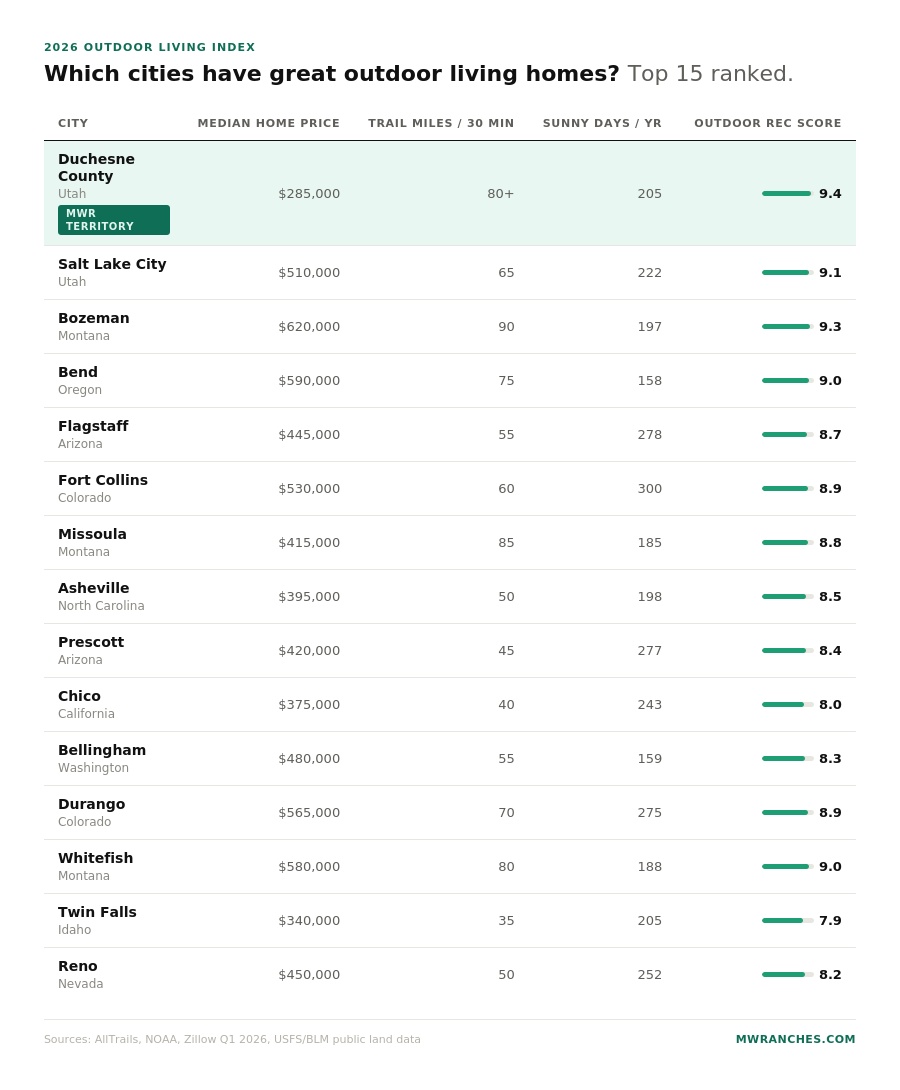
Quick Comparison: Top Outdoor Living Cities at a Glance
1. Duchesne County, Utah — Best Value for Rural Outdoor Living
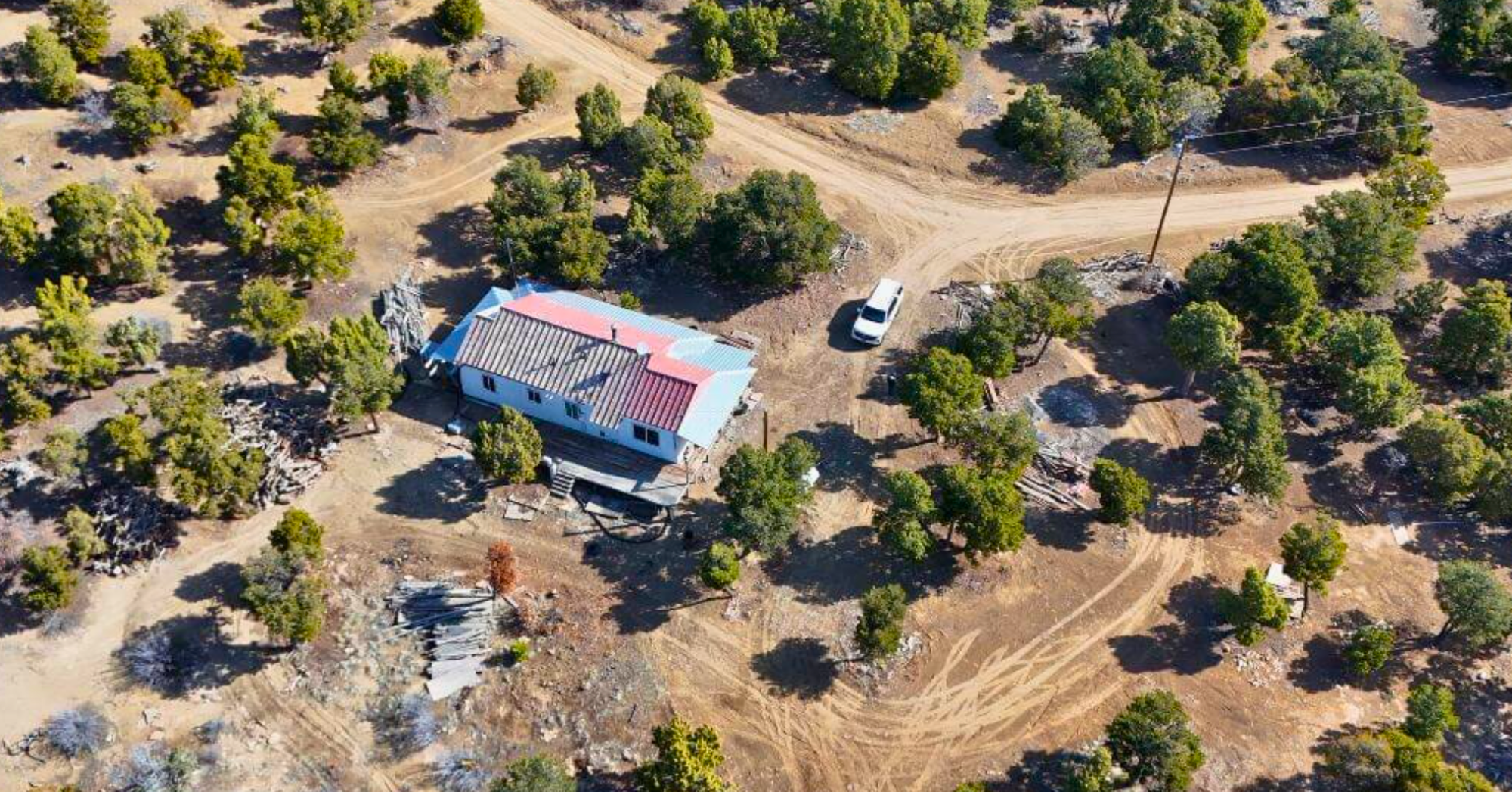
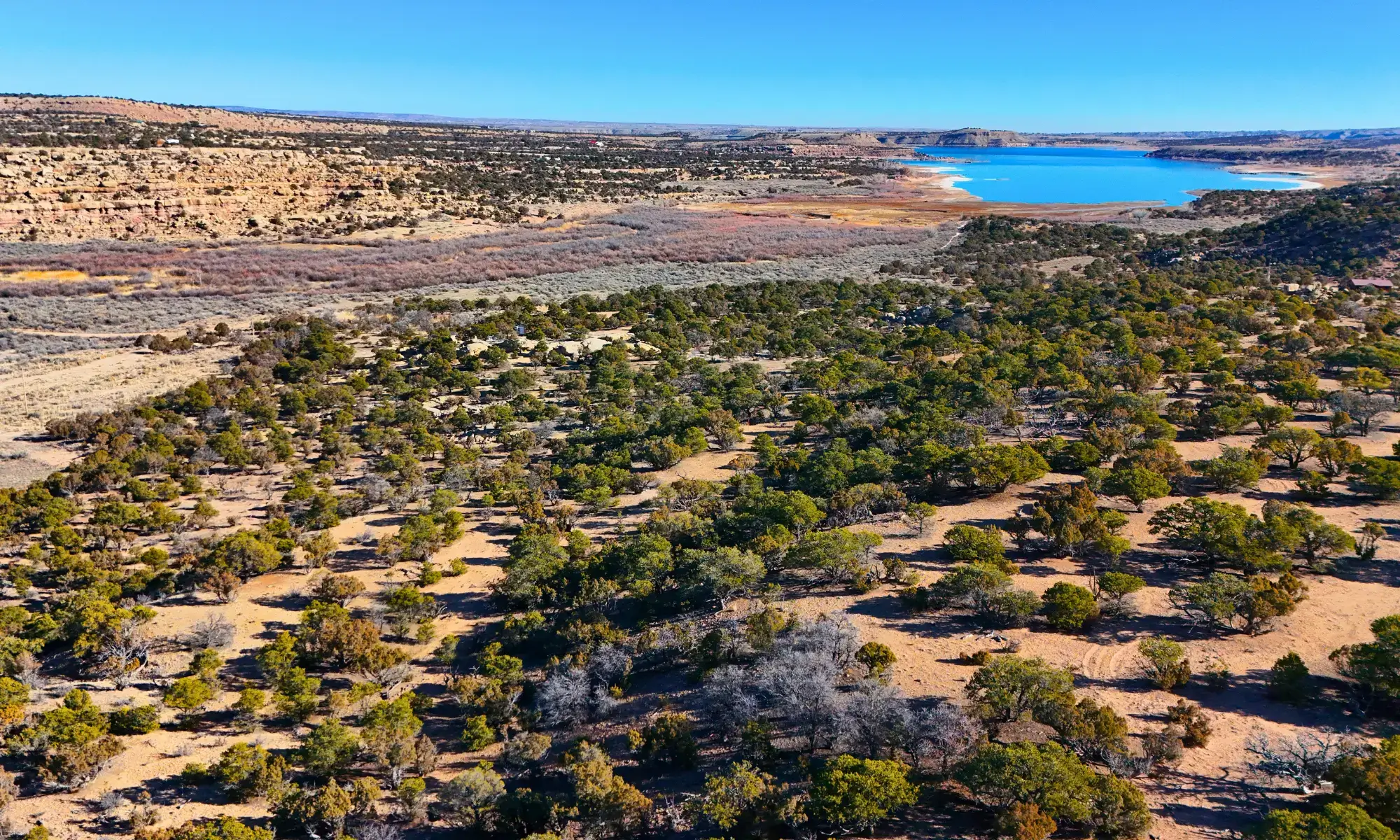
Duchesne County sits in the heart of the Uinta Basin and is the starting point for some of Utah's most underrated outdoor access in the country. Starvation Reservoir, the Ashley National Forest, and thousands of acres of BLM land are all within a short drive. The Uinta Mountains — home to Kings Peak, the highest point in Utah — are accessible from here in a way that's simply not possible from any metro area.
What makes Duchesne County stand out is the combination of access and affordability. Median land and home prices are a fraction of what you'd pay in Salt Lake City or Moab, and the lifestyle is genuinely rural. You're not simulating outdoor living from a subdivision — you're actually in it.
Why it ranks first: Unmatched public land adjacency, lowest cost of entry on this list, and direct access to four-season recreation including hunting, ATV riding, fishing, hiking, and snowmobiling. For buyers who want land ownership as part of their outdoor lifestyle, Duchesne County offers something no city on this list can: the ability to own agricultural land with no credit check required and flexible owner financing.
Best for: Buyers prioritizing land ownership, hunting access, off-grid recreation, or a permanent rural retreat.
Explore available properties near Starvation Reservoir and Conejo Hills at Mountains West Ranches.
2. Salt Lake City, Utah — Urban Access, Mountain Scale
Salt Lake City is one of the most outdoors-integrated cities in the country. Seven world-class ski resorts sit within an hour of downtown. Hiking trails in the Wasatch Range begin at the city's edge. The Jordan River Parkway provides 40+ miles of urban trail running and cycling, and the Great Salt Lake adds a unique ecological dimension to the metro landscape.
SLC is also one of the most affordable major western cities, though prices have risen considerably since 2020. The city's layout — grid streets flanked by mountains on one side and the lake on the other — means outdoor access is baked into the geography rather than something you have to commute to.
Why it ranks second: Scale of ski access, year-round trail variety, and a genuine outdoor culture that extends from the city's neighborhoods into the surrounding peaks. 222 days of sunshine annually makes the outdoor season long and varied.
Best for: Buyers who want city amenities and mountain access without choosing between them.
3. Bozeman, Montana — Premium Outdoor Access at a Cost
Bozeman has become one of the most sought-after outdoor living destinations in the country, and the price tag reflects it. Median home prices have crossed $620,000 as remote workers and lifestyle migrants have driven demand. That said, what you get for the price is genuinely exceptional: Yellowstone National Park is 90 minutes south, Bridger Bowl and Big Sky are close to the city, and Gallatin National Forest wraps the valley on multiple sides.
Trail access is among the highest on this list, with 90+ miles of trail within a 30-minute drive. The community culture here is deeply oriented around skiing, fly fishing, mountain biking, and backcountry travel.
Why it ranks third: Highest trail density on this list, proximity to Yellowstone, and a true four-season outdoor lifestyle. The cost is real, but so is the access.
Best for: High-income buyers relocating from coastal markets who want best-in-class mountain access.
4. Bend, Oregon — High Desert Recreation Hub
Bend sits at the foot of the Cascades in central Oregon's high desert and offers a recreation profile that few cities match. Mount Bachelor provides skiing within 20 minutes of downtown. The Deschutes River runs through the city, offering kayaking, paddleboarding, and fly fishing at the street level. The Cascade Lakes Highway opens into hundreds of miles of trail in summer.
The trade-off is a shorter sunshine window — 158 days annually — compared to Utah and Arizona markets. But the combination of volcanic landscape, dense conifer forest, and river access creates an outdoor environment that's genuinely distinct.
Why it ranks fourth: Recreation variety (river, mountain, desert, and trail all within reach), a highly developed outdoor retail and services community, and a livable mid-size city core.
Best for: Buyers who prioritize recreation variety and don't mind a cloudier winter.
5. Flagstaff, Arizona — Elevation Changes Everything
At 7,000 feet, Flagstaff is a different Arizona than the Phoenix-Scottsdale corridor most people picture. Ponderosa pine forests surround the city. The San Francisco Peaks offer skiing at Arizona Snowbowl and summer hiking above the treeline. The Grand Canyon is 90 minutes north, and Sedona's red rock trails are an hour south.
With 278 days of sunshine annually and significantly cooler temperatures than the desert floor, Flagstaff functions as a four-season outdoor city in a way that lower-elevation Arizona towns cannot. Home prices are lower than Bend or Bozeman while offering comparable lifestyle access.
Why it ranks fifth: High sunshine count, rare Arizona elevation, and geographic access to two of the country's most iconic landscapes within a day trip.
Best for: Buyers who want a mountain lifestyle without mountain-state price tags or harsh winters.
6. Fort Collins, Colorado — The Consistently Great Pick
Fort Collins has quietly ranked near the top of outdoor living surveys for over a decade, and it earns the consistency. Rocky Mountain National Park is 45 minutes away. The Poudre River Canyon provides whitewater kayaking, hiking, and fly fishing. The city itself has one of the most developed urban trail systems in the Mountain West, with 50+ miles of paved trail connecting neighborhoods to open space and natural areas.
300 days of sunshine annually is the highest on this list, and while it sits along the Front Range (meaning more wind and weather variability than Utah basin cities), the climate supports outdoor activity nearly year-round.
Why it ranks sixth: Most sunshine on the list, excellent urban trail infrastructure, and a larger metro economy that supports stable property values.
Best for: Buyers relocating for outdoor lifestyle without leaving proximity to a mid-size city economy.
7. Missoula, Montana — Trailhead in Every Neighborhood
Missoula offers something unusual for a city of its size: genuine wilderness access from within city limits. The Clark Fork River runs through downtown. The "M" trail and Rattlesnake Wilderness are accessible without a car. And the surrounding Lolo National Forest provides hundreds of miles of backcountry trail, hunting land, and dispersed camping.
At a $415,000 median home price, Missoula is considerably more accessible than Bozeman while offering comparable public land access. The University of Montana anchors a younger, active community culture.
Why it ranks seventh: City-integrated trail access, lower cost than Bozeman, and one of the highest ratios of public land to population on this list.
Best for: Buyers who want Montana outdoor culture at a more accessible price point.
8. Asheville, North Carolina — The East's Best Outdoor City
For buyers east of the Rockies, Asheville is in a category of its own. The Blue Ridge Parkway runs adjacent to the city. The Pisgah and Nantahala National Forests provide over a million acres of trail access within an hour's drive. Whitewater kayaking on the French Broad River, mountain biking on Pisgah's technical trails, and long-distance hiking on the Appalachian Trail are all accessible from Asheville.
At $395,000 median home price, Asheville is one of the more affordable high-quality outdoor cities on this list. The climate is mild by mountain standards, and 198 days of sunshine supports a long activity season.
Why it ranks eighth: Best eastern outdoor city by a significant margin, strong trail infrastructure, and an established outdoor industry presence (many gear brands have offices here).
Best for: East Coast buyers who don't want to relocate west but want genuine mountain outdoor access.
9. Prescott, Arizona — Underrated and Underpriced
Prescott is consistently overlooked in outdoor living conversations and consistently outperforms expectations. The Prescott National Forest surrounds the city on three sides, offering over 450 miles of trail. Watson Lake — known for its dramatic granite boulder landscape — is 10 minutes from downtown. The elevation (5,400 feet) keeps summers mild relative to Phoenix, and 277 days of sunshine makes it one of the sunniest cities on this list.
Median home prices are holding around $420,000, making it significantly more affordable than Flagstaff with comparable sunshine and reasonable trail density.
Why it ranks ninth: High sunshine, low price-to-access ratio, and granite boulder landscape that's unlike anything else in the Southwest.
Best for: Retirees and remote workers seeking a quiet, walkable outdoor town with low humidity and long sunshine seasons.
10. Chico, California — Sierra Gateway on a Budget
Chico sits at the northern end of California's Central Valley, close enough to the Sierra Nevada foothills to offer accessible outdoor living without Sierra-level prices. Lake Almanor, Lassen Volcanic National Park, and the Feather River Canyon are all within 90 minutes. Bidwell Park — one of the largest municipal parks in the country — provides 26 miles of trail within city limits.
At $375,000 median, Chico is the most affordable California market on this list. Summer heat is real at 200+ feet elevation, but the proximity to mountain relief makes the lifestyle workable.
Why it ranks tenth: Best California outdoor access-to-price ratio, Bidwell Park as a genuine urban trail resource, and Sierra access without Sierra real estate costs.
Best for: California buyers not ready to leave the state but priced out of Tahoe and Mammoth markets.
11. Bellingham, Washington — Pacific Northwest Trail Access
Bellingham sits at the convergence of the Salish Sea and the North Cascades, which creates a recreation profile heavy on kayaking, alpine hiking, and skiing. Mount Baker Ski Area is 60 miles east. The Chuckanut Mountains provide trail access from the city's neighborhoods. The San Juan Islands are a ferry ride away.
The 159 days of sunshine is the lowest on this list — a real trade-off for Pacific Northwest buyers — but the combination of marine, alpine, and lowland forest access is genuinely exceptional for outdoor diversity.
Why it ranks eleventh: Recreation diversity (saltwater, alpine, lowland forest), proximity to Vancouver and Seattle without their price tags, and a deeply outdoor-oriented local culture.
Best for: Buyers who prioritize recreation variety and are comfortable with a cloudier climate.
12. Durango, Colorado — Mountain Town, Full Spectrum
Durango occupies a section of the San Juan Mountains that most Colorado visitors never reach, and the recreation profile reflects that remoteness. Purgatory Resort sits 25 miles north. The Weminuche Wilderness — Colorado's largest — is accessible from town. The Animas River provides whitewater kayaking downtown. Mesa Verde National Park is an hour west.
At $565,000 median, Durango is expensive for its size, but buyers consistently cite the lifestyle-to-cost ratio as acceptable compared to Front Range markets or Telluride.
Why it ranks twelfth: Full-spectrum mountain recreation (skiing, river, wilderness, trails, cycling) and a genuine small-town feel that larger Colorado mountain towns have lost.
Best for: Buyers who want the Colorado mountain lifestyle without the Vail/Telluride price tag.
13. Whitefish, Montana — Glacier Country Living
Whitefish is the gateway to Glacier National Park, and that proximity defines the lifestyle. Whitefish Mountain Resort is minutes from downtown. Going-to-the-Sun Road and the park's interior trail system are accessible in summer. Flathead Lake — the largest natural freshwater lake west of the Mississippi — is 30 minutes south.
Prices have climbed significantly since 2020, now around $580,000 median, but for buyers oriented around Glacier and the broader northwest Montana landscape, Whitefish remains the most logical base.
Why it ranks thirteenth: Glacier access is unique and irreplaceable, and the town's scale (small, walkable, genuine) has held up better than some other resort markets.
Best for: Buyers drawn specifically to Glacier National Park or northwest Montana's fishing and hunting culture.
14. Twin Falls, Idaho — Snake River Canyon Access at Low Cost
Twin Falls is one of the lowest-cost entries on this list at $340,000 median, and it punches well above its profile in terms of outdoor access. The Snake River Canyon provides rim hiking, BASE jumping (Twin Falls is one of the few places in the country where it's legal), kayaking, and trout fishing. Shoshone Falls — taller than Niagara — is 5 miles from downtown. Sawtooth National Forest is within 90 minutes.
205 days of sunshine puts it on par with Salt Lake City, and the lower-humidity continental climate makes outdoor activity comfortable through much of the year.
Why it ranks fourteenth: La mejor relación valor-acceso de la lista, un paisaje de cañones único en el Oeste de la Montaña y una menor barrera de entrada para compradores que vienen de mercados de alto costo.
Ideal para: Compradores conscientes de su presupuesto que desean una auténtica vida al aire libre al estilo del oeste sin el precio de Montana o Colorado.
15. Reno, Nevada — Desierto Alto con Acceso a la Sierra
Reno es subestimada como ciudad para actividades al aire libre. El lago Tahoe está a 45 minutos al oeste, ofreciendo esquí, senderismo y uno de los lagos más espectaculares de Norteamérica. El Parque de Aguas Bravas del Río Truckee atraviesa el centro de la ciudad. Las montañas y el desierto de Virginia, al este de la ciudad, ofrecen campismo libre, acceso para vehículos todoterreno y terrenos de caza con casi ninguna multitud.
252 días de sol al año es uno de los recuentos más altos en el Oeste de la Montaña, y la falta de impuesto estatal sobre la renta en Nevada es un factor importante para los trabajadores remotos que comparan mercados.
Por qué ocupa el decimoquinto lugar: Acceso a Tahoe sin los precios de Tahoe, alto número de días soleados y la mayor base de empleos en la economía de casinos de cualquier ciudad en esta lista para compradores que buscan opciones de empleo.
Ideal para: Trabajadores remotos y jubilados que desean acceso a la Sierra, ventajas fiscales de Nevada y una ciudad de tamaño mediano con infraestructura real.
La alternativa rural: Poseer tierra en lugar de solo vivir cerca de ella
Cada ciudad en esta lista ofrece acceso al aire libre. Pero el acceso no es lo mismo que la propiedad.
Para los compradores cuyo estilo de vida al aire libre incluye caza, paseos en ATV, ganado, agricultura de pasatiempo o simplemente tener espacio —espacio real, privado y escriturado—, la propiedad de tierras rurales es una propuesta fundamentalmente diferente a comprar una casa cerca de un sendero.
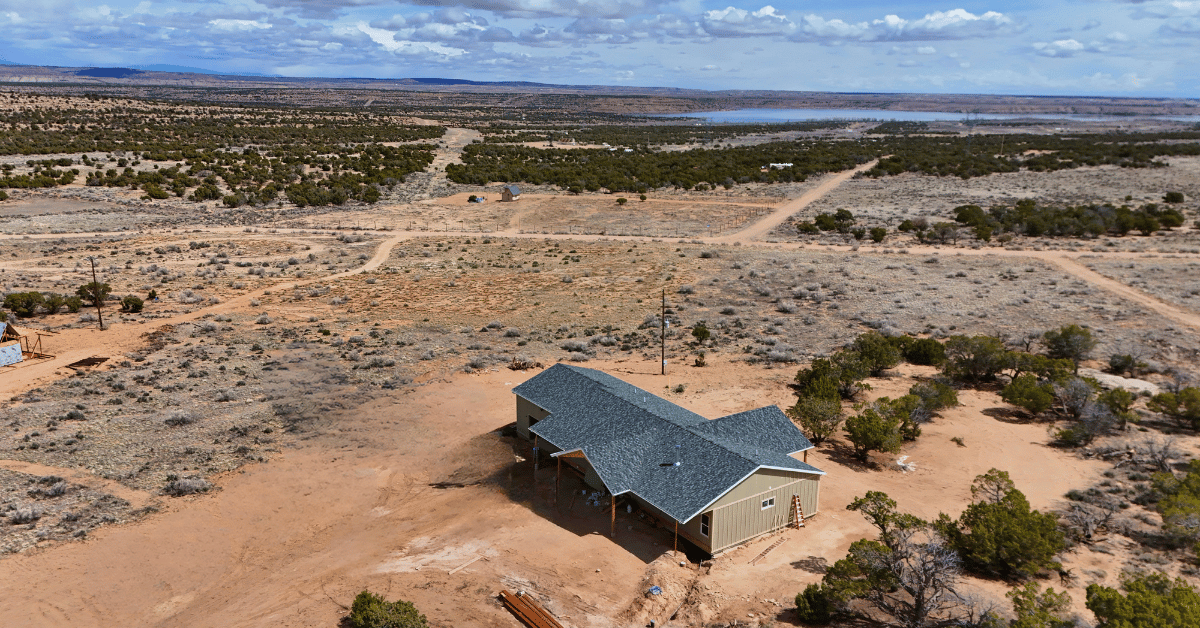
El condado de Duchesne, Utah, representa cómo es realmente esa alternativa. Las tierras agrícolas con zonificación A-5 (parcelas mínimas de 5 acres) se encuentran adyacentes a tierras de la BLM, caminos del servicio forestal y acceso a embalses. Los compradores pueden poseer su propio pedazo del paisaje en el que han estado recreándose, no solo visitarlo.
MW Ranches se especializa en tierras rurales financiadas por el propietario en el condado de Duchesne. No se requiere verificación de crédito, y las parcelas comienzan con un pago inicial de $1,000 y plazos de 10 o 15 años. Para los compradores que han sido excluidos del mercado inmobiliario de pueblos de montaña o que simplemente quieren algo que ningún lote urbano puede ofrecer, este es el punto de entrada.
Parcelas disponibles actualmente cerca de:
- Embalse Starvation (pesca, navegación, aves acuáticas)
- Colinas Conejo (acceso para ATV, caza, vistas panorámicas)
- Mesa Buckhorn (terreno elevado, privacidad, vistas de la Cuenca Uinta)
Explorar propiedades disponibles
Metodología
Las clasificaciones de ciudades se basan en cinco factores ponderados: kilómetros de senderos accesibles en un radio de 30 minutos en coche (obtenidos de AllTrails y bases de datos estatales de senderos), porcentaje de tierras públicas en un radio de 50 millas (datos de USFS y BLM), precio medio de la vivienda (Zillow, Q1 2026), días de sol al año (promedios de 30 años de la NOAA) y puntuación de infraestructura de recreación al aire libre (proximidad a estaciones de esquí, ríos, parques nacionales y sistemas de senderos desarrollados). Las puntuaciones se ponderan por igual en los cinco factores. Los datos de tierras rurales del condado de Duchesne reflejan el inventario actual de propiedades de Mountains West Ranches y los registros del tasador del condado de Duchesne.
Última actualización: 2026. Mountains West Ranches es una empresa de venta de terrenos rurales con sede en el condado de Duchesne, Utah. Nos especializamos en terrenos agrícolas con financiamiento del propietario para compradores interesados en actividades al aire libre en el condado de Duchesne, Utah.

%20(446%20x%20128%20px)%20(306%20x%20105%20px)%20(2)%20(1).webp)


